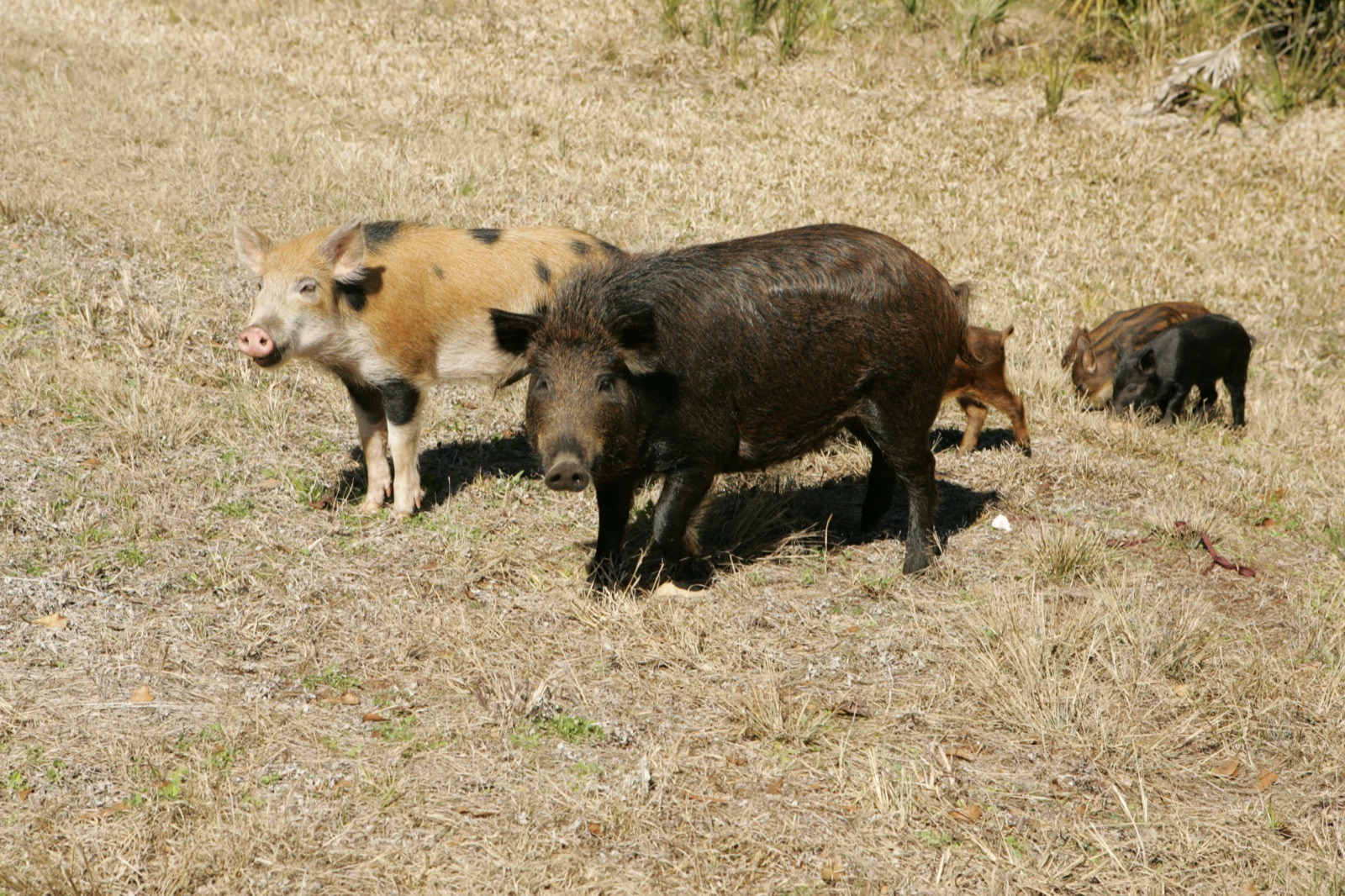
Direct answer
What feral hog calls mean in the field
Use sound only after fresh tracks, rooting, bedding, or direct observation has placed hogs in the area. Wind, a safe shooting lane, and knowledge of nearby domestic pigs are more valuable than a large recording library, and any response should be treated as uncertain.
| Call or cue | What it communicates | Best context | Main risk |
|---|---|---|---|
| Contact grunt | Low-arousal contact among nearby members of a sounder. | Use around confirmed hog activity when a relaxed social sound fits better than distress. | Evidence for reliable attraction is limited; do not present contact grunts as a substitute for scouting. |
| Feeding grunt | A low-arousal sound associated with group feeding and close contact. | Most plausible near active food, rooting, or a known feeding route. | A loud feeding track in empty habitat does not create fresh hog activity where none exists. |
| Nursing sow grunt | A sow coordinates and reassures nursing piglets. | Treat mainly as sounder behavior to recognize; use only when piglets and maternal context are plausible. | Maternal groups can be defensive, and the call should not encourage a close approach without a safe lane. |
| Piglet squeal or distress | A piglet is restrained, separated, frightened, or being attacked. | If legal, use only as a brief test near a confirmed sounder where a maternal response is possible. | Continuous squealing can escalate a defensive encounter or educate the sounder. |
| Adult growl | Threat, competition, irritation, or defense at close range. | Recognize as social context; it is not a general-purpose attraction sound. | A growl from dense cover can indicate a close defensive animal. |
| Alarm call and teeth clacking | High arousal, threat assessment, or readiness to defend or flee. | Treat as diagnostic evidence that the sounder has detected danger. | Alarm behavior means the encounter is less predictable and may be unsafe at close range. |
Vocabulary & use
Feral Hog calls, one by one
Contact grunt
Natural vocalization- Sound
- A short, low grunt repeated with irregular spacing
- Meaning
- Low-arousal contact among nearby members of a sounder.
- When it fits
- Use around confirmed hog activity when a relaxed social sound fits better than distress.
- How to make it
- Give a small group of low, varied grunts and leave a long pause rather than playing a fixed loop.
- Likely response
- Hogs may answer, pause to listen, move closer, or continue feeding without a visible reaction.
- Do not miss
- Evidence for reliable attraction is limited; do not present contact grunts as a substitute for scouting.
Feeding grunt
Natural vocalization- Sound
- Soft, repetitive grunts mixed with rooting and movement noise
- Meaning
- A low-arousal sound associated with group feeding and close contact.
- When it fits
- Most plausible near active food, rooting, or a known feeding route.
- How to make it
- Use low volume and natural variation, optionally with subtle leaf movement where safe and legal.
- Likely response
- A nearby hog may relax, reveal itself, or edge toward the supposed feeding group.
- Do not miss
- A loud feeding track in empty habitat does not create fresh hog activity where none exists.
Nursing sow grunt
Natural vocalization- Sound
- A rhythmic series of low maternal grunts
- Meaning
- A sow coordinates and reassures nursing piglets.
- When it fits
- Treat mainly as sounder behavior to recognize; use only when piglets and maternal context are plausible.
- How to make it
- If used, keep the series low and short rather than repeating it continuously.
- Likely response
- Piglets or a nearby sow may orient, but adults may also become cautious if the source is misplaced.
- Do not miss
- Maternal groups can be defensive, and the call should not encourage a close approach without a safe lane.
Piglet squeal or distress
Natural vocalization- Sound
- A high, urgent squeal that rises sharply above normal grunts
- Meaning
- A piglet is restrained, separated, frightened, or being attacked.
- When it fits
- If legal, use only as a brief test near a confirmed sounder where a maternal response is possible.
- How to make it
- Play or produce one very short irregular series, then remain silent and ready to identify a fast response.
- Likely response
- A sow may approach, the group may bunch and vocalize, or alarmed hogs may leave.
- Do not miss
- Continuous squealing can escalate a defensive encounter or educate the sounder.
Adult growl
Natural vocalization- Sound
- A low, rough growl or grunt-growl
- Meaning
- Threat, competition, irritation, or defense at close range.
- When it fits
- Recognize as social context; it is not a general-purpose attraction sound.
- How to make it
- Do not answer a close, unseen growl. Identify the animal and maintain a safe route away.
- Likely response
- Another hog may yield, posture, or escalate, while the group becomes alert.
- Do not miss
- A growl from dense cover can indicate a close defensive animal.
Alarm call and teeth clacking
Nonvocal cue- Sound
- A sharp alarm note, abrupt snort, or audible clacking of the teeth
- Meaning
- High arousal, threat assessment, or readiness to defend or flee.
- When it fits
- Treat as diagnostic evidence that the sounder has detected danger.
- How to make it
- Do not imitate it in an attraction sequence. Stop movement and reassess the animal's position and escape route.
- Likely response
- Hogs may bunch, freeze, rush into cover, or confront a nearby threat.
- Do not miss
- Alarm behavior means the encounter is less predictable and may be unsafe at close range.
Seasonal context
When the message is believable
Cool-season feeding
Use fresh rooting and food to select the stand. Low contact or feeding grunts are more credible than a long distress sequence.
Farrowing and young-pig period
Piglet and nursing sounds may be present, but maternal response and defensive risk increase. Keep any legal use brief and maintain a clear field of view.
Hot or dry conditions
Water, shade, night activity, and thermals dominate the setup. Calling is secondary to confirmed movement and may be constrained by night-hunting rules.
Field sequences
Two restrained ways to build the conversation
These are decision frameworks, not guaranteed formulas. Shorten, soften, or stop when the animal gives new information.
Sequence 01
Low-arousal feeding contact
For a legal setup beside fresh feeding sign where hogs may be just inside cover.
- Make three or four low contact grunts with uneven spacing.
- Add a few softer feeding grunts, then stop for several minutes.
- Repeat once at lower volume only if no alarm sound or movement is detected.
Stop or change when: Stop if hogs answer, bunch, step into view, or begin a downwind check; let the group reveal its route.
Sequence 02
Brief piglet-distress test
For a confirmed sounder with piglets, only where the method is legal and a defensive sow can be handled safely.
- Use one brief, irregular piglet squeal lasting only a few seconds.
- Remain completely silent while watching every edge of the cover.
- If there is no response, make one shorter follow-up and end the sequence.
Stop or change when: Stop on any rush, answering grunt, alarm note, or visual movement; further distress adds risk without adding useful information.
Before the first note
Field setup
- Confirm very fresh tracks, rooting, droppings, mud, or direct sounder use before relying on calls.
- Set the wind or thermal so scent does not reach bedding or the expected downwind approach before the sound does.
- Choose a lane that allows full target identification, awareness of the rest of the sounder, and a safe backstop.
- Know whether domestic pigs, livestock, dogs, roads, or dwellings are nearby before producing pig sounds.
Read the animal
What the response is telling you
- Feeding stops and several hogs raise their heads toward the source.
- Low answering grunts or piglet squeals shift closer through cover.
- The sounder bunches together, with adults placing themselves near younger pigs.
- One or more hogs arc downwind, alarm, clack teeth, or leave rather than approaching directly.
Common errors
What makes the setup less believable
Using a caller instead of finding hogs
Feral hog playback is not consistently reliable. Fresh sign, current food, bedding, water, and wind should place the stand before sound is added.
Looping piglet distress
A continuous emergency sound can make a sow defensive, scatter the sounder, or teach hogs that the source is unsafe. Keep it brief and rare.
Approaching an alarmed or wounded hog
Growling, teeth clacking, bunching, or close-cover movement requires caution. Maintain a safe route and follow local recovery and hunter-safety guidance.
Rules & ethics
Verify before the hunt
Feral hog classification, licensing, landowner authorization, public-land seasons, night equipment, electronic callers, transport, and carcass rules vary widely. Never transport or release live feral swine outside lawful channels, and follow USDA guidance for gloves, cleaning, disease reporting, and separation from domestic pigs.
Hunting-call laws vary by state, species, season, land type, and device. Verify the current wildlife-agency regulations for the exact hunt before using any recorded, amplified, or electronic call.
Electronic-call rules checklist →Questions hunters ask
Feral Hog calling FAQ
Do feral hog calls work reliably?
No call reliably pulls hogs from any habitat. Contact, feeding, or piglet sounds may prompt a response from a nearby sounder, but fresh sign and wind remain the foundation of the setup.
What is the safest feral hog call to start with?
Low-volume contact or feeding grunts send a less urgent message than piglet distress. Start briefly and stop if the group shows alarm or defensive behavior.
What should I do with a sick-looking or dead feral hog?
Do not handle or move an unexplained sick or dead animal casually. Follow the state wildlife or animal-health reporting process and current USDA biosecurity guidance.
Research trail
Sources and further reading
Biology and call context were synthesized into original copy from the following references.