Turkey yelp, cluck, purr & putt
Learn how turkey yelps, clucks, purrs, and putts differ, what each signal means, and how to build restrained, safer calling sequences.
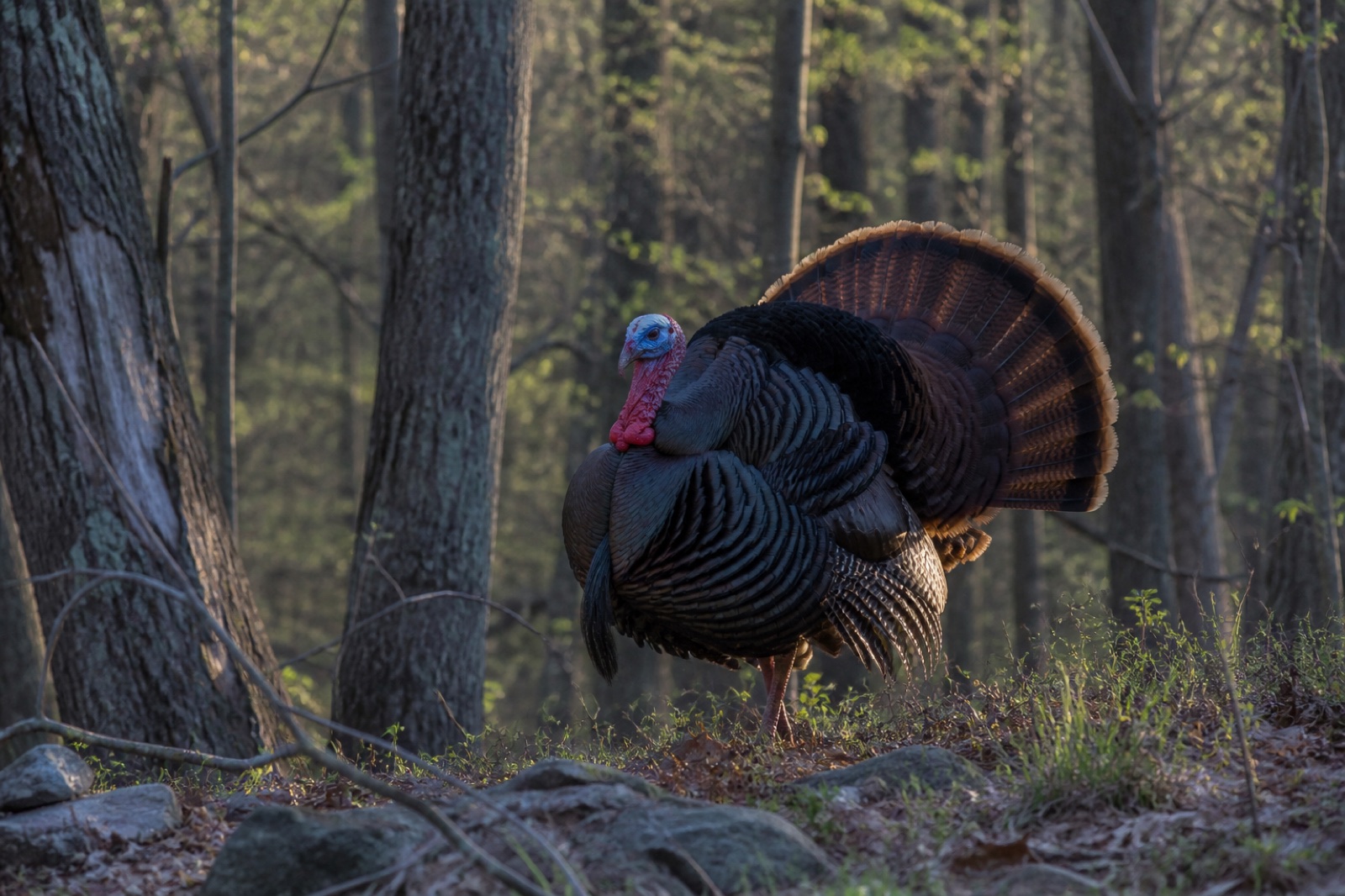
Soft notes, clear meaning
Learn what turkey yelps, clucks, purrs, putts, and other calls communicate, then adjust calling from the roost period through late morning and afternoon.
2 connected field guidesWild turkeys use a wide vocabulary, but more sounds do not automatically create a more convincing conversation. Plain yelps, clucks, and purrs cover many calm social situations; alarm putts belong to a different category and should not be copied casually.
The vocabulary guide explains the sounds; the time-of-day guide puts them into a changing field day. Both keep safety central because realistic turkey calls can attract another person as well as a bird.
Focused reading
Start with the question in front of you, then follow the related guide when the field situation changes.
Learn how turkey yelps, clucks, purrs, and putts differ, what each signal means, and how to build restrained, safer calling sequences.
Plan turkey calling from the roost period through midday and afternoon by matching volume, vocabulary, setup, and safety to changing bird behavior.
Species context
Use the species page for natural vocabulary, seasonal timing, response signs, field sequences, legal reminders, and its research trail.