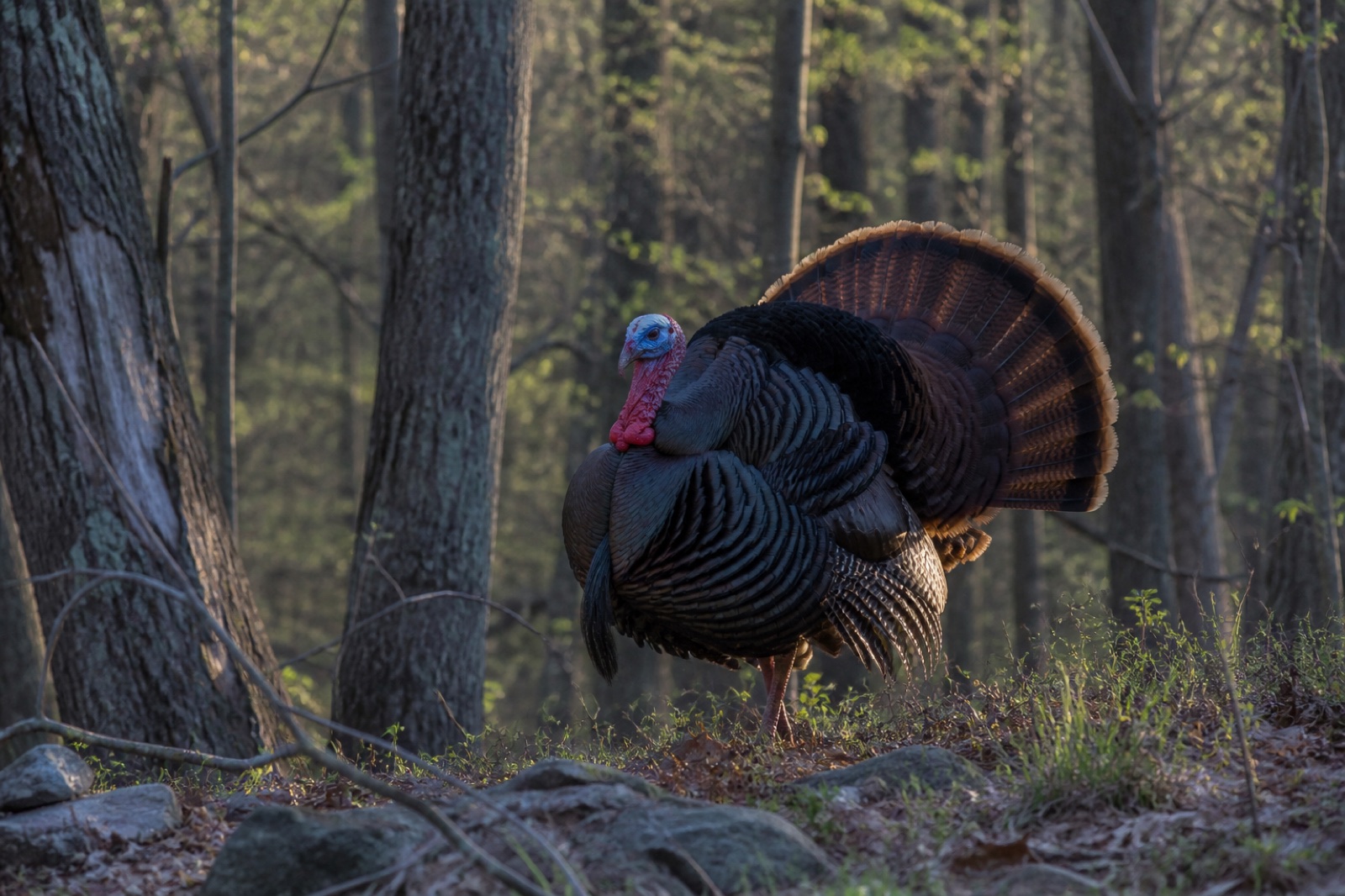
A yelp, cluck, purr, and putt are not four interchangeable ways to make turkey noise. They carry different levels of energy and urgency, and their meaning depends on spacing, volume, the birds around them, and what happened immediately before the sound. Learning those distinctions is more useful than collecting a long list of calls.
For hunters, the practical goal is to imitate a small, believable part of a conversation without turning every setup into a performance. Start with calm contact sounds, read the response, and remember that a realistic turkey call may also attract another hunter. Finish the setup and identify a safe field of fire before making the first note.
What to carry into the field
- A plain yelp is flexible contact language, while a cluck is a shorter attention or reassurance note.
- A soft purr often accompanies feeding or flock contact; a sharp putt commonly signals alarm.
- Cadence, volume, and the surrounding behavior determine meaning more reliably than a call's name alone.
- Never stalk turkey sounds, and never use sound or movement as a substitute for positive target identification.
Field principle
Hear the signal before copying the sound
Turkey vocabulary works in context. A few unhurried notes from feeding birds describe a different social scene from rapid, forceful notes after the flock snaps to attention. Distance changes perception too: a soft sound nearby can be more meaningful than a loud series on the next ridge. Listen for the note, then notice repetition, intensity, direction, and the behavior that follows.
Treat the call name as a useful label rather than a translation with one fixed definition. Individual birds have different voices, and the same basic vocalization can carry more or less urgency. When practicing, compare verified recordings and describe what you hear in plain language—calm contact, excited contact, close flock talk, or alarm—before trying to reproduce it.
Field principle
Yelp vs. cluck: broad contact and a brief check-in
A plain yelp is the most versatile of these four sounds. It is a two-part note commonly repeated in a short, uneven series, and wild turkeys use yelping in several contact situations. In a restrained hunting sequence, a few relaxed yelps can simply place a hen in the landscape. The series should sound like a bird communicating, not an identical phrase replayed at fixed intervals.
A plain cluck is shorter and more isolated. One or a few separated notes can get another bird's attention or add quiet reassurance after a yelp series. Do not confuse a hunting routine with a biological rule: a cluck does not automatically make a gobbler approach. If a bird has already located the source or is moving closer, another cluck may add attention exactly when stillness would be more convincing.
Field principle
Purr vs. putt: close flock talk and alarm
A purr is usually a low, rolling sound associated with close contact among feeding or traveling birds. A cluck followed by a purr can suggest quiet flock talk, so it belongs at conversational volume rather than being projected across a large area. Purring is not always contentment—faster, louder purring can occur in aggressive interactions—which is another reason to match the live birds instead of relying on a one-word definition.
A putt is commonly an alarm note: sharp, abrupt, and often followed by an alert posture or departure. Hunters sometimes imitate a putt to make a visible bird lift its head, but it is not a general-purpose contact call and it changes the scene immediately. If your cluck becomes hard and urgent, stop and reset rather than stacking more notes on a sound that may communicate danger.
Field principle
Build a restrained sequence—and a safer setup
A simple sequence can begin with a small group of plain yelps, followed by a listening period. If a turkey answers but remains out of sight, one soft cluck or a brief cluck-purr may fit the same calm social story. Match only what the situation supports; do not jump from quiet contact to aggressive cutting because a bird failed to answer on your schedule. Turkeys can approach without another sound.
Set up against a substantial natural barrier with a clear view, know where companions are, and avoid red, white, blue, or black colors associated with a gobbler. Never creep toward yelps, purrs, or gobbling because the caller may be another person. If another hunter approaches, announce yourself in a clear human voice; do not wave, stand suddenly, or answer with a turkey call.
Practice block
The four-signal listening drill
- Play verified wild-turkey recordings and label each example by energy and context before reading its call name.
- Record a relaxed yelp series, two separated clucks, and one quiet purr while keeping each signal clearly distinct.
- Build one sequence of yelps, silence, and a single cluck-purr; remove any note that does not advance the same social story.
- Rehearse the safety response: stop calling, keep the firearm controlled, and speak clearly if another hunter enters the setup.
Questions readers ask
Turkey yelp, cluck, purr & putt FAQ
What is the difference between a turkey cluck and a putt?
A plain cluck is usually a short contact or attention note, while a putt is commonly associated with alarm. The distinction is not pitch alone: urgency, spacing, posture, and what follows the note all matter. Practice soft, separated clucks and avoid turning them into hard, repeated alarm notes.
Should a beginner learn the yelp or purr first?
Learn a relaxed plain yelp first because it provides a useful foundation for cadence and contact calling. Add a clean cluck next, then work on a quiet purr. A small vocabulary used with context is more valuable than several sounds that cannot be controlled at different volumes.
Can turkey calling attract another hunter?
Yes. Any realistic turkey sound can be mistaken for a live bird, especially where several hunters share the landscape. Never stalk a turkey sound, use extra care with decoys, identify the target and background positively, and alert an approaching person with a clear human voice rather than movement or turkey calls.
Research trail
Sources and further reading
This guide draws on the behavior, calling practice, safety, and equipment context relevant to its subject from the references below.