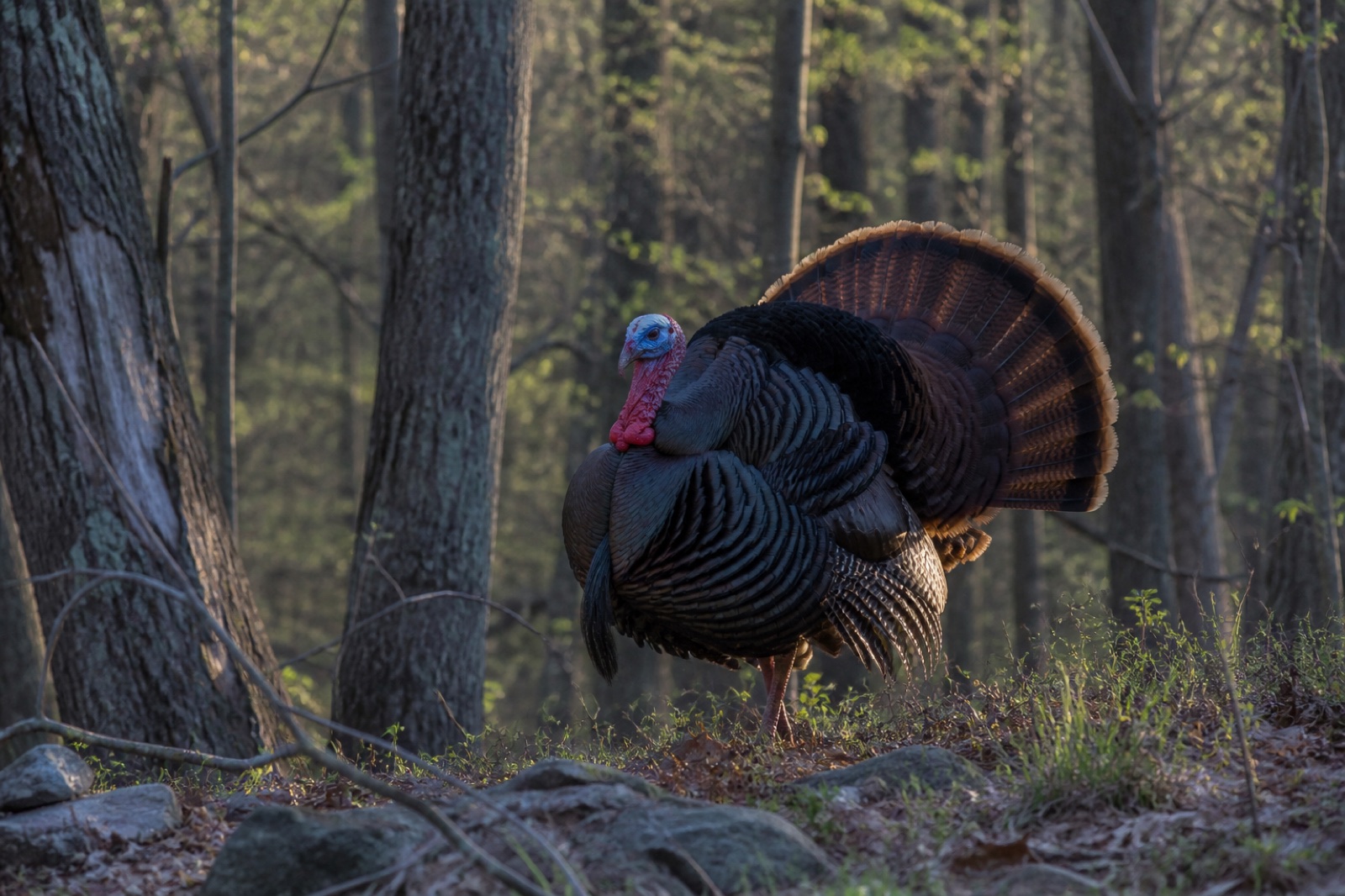
Time of day changes what turkeys are likely to be doing, but the clock does not dictate one mandatory call. At dawn, birds are moving from roosts into social and feeding routines. Later they may travel, breed, feed, dust, preen, loaf, or drift back toward evening roost areas. Weather, hunting pressure, nesting stage, and local habitat can rearrange that pattern.
A useful day plan therefore combines broad biological windows with current evidence. Listen for live birds, read fresh sign and known travel routes, and keep every tactic inside the local season and legal shooting hours. Calling should support a plausible setup, not compensate for being in the wrong place.
What to carry into the field
- Use time of day as context, then let live birds, habitat, weather, and legal hours make the decision.
- Keep roost-period calling soft and sparse so the imagined bird does not dominate the scene before fly-down.
- Late-morning and afternoon opportunities often depend on travel, feeding, dusting, or loafing areas rather than constant gobbling.
- Assume every turkey sound could be another hunter and never stalk a call, movement, or partially seen bird.
Field principle
Before fly-down: locate, settle, and call softly
The roost period rewards preparation more than volume. Enter without walking directly beneath occupied trees, choose a calling position with a protected back and a clear safe view, and let natural morning sound establish itself. A few muffled tree yelps or soft clucks can acknowledge a bird without pretending that an excited hen is already running across the ground.
A gobble from the limb provides location information, not proof that the tom will land beside the caller. Hens, terrain, preferred landing openings, and habitual travel can pull the flock elsewhere. Avoid answering every gobble. Once the bird knows where the source is, silence protects the setup and leaves room to hear wingbeats or an unexpected ground approach.
Field principle
Early morning: follow the flock's energy, not a script
After fly-down, turkeys often move toward feeding or strutting areas, and the woods can shift quickly from loud to quiet. If hens are vocal, note their rhythm and intensity before replying. A relaxed yelp series may fit a separated bird; a few clucks can maintain low-pressure contact. Aggressive cutting is a specific social choice, not the default next step when a gobbler follows hens away.
Watch direction more closely than answer count. A gobble that becomes louder may indicate movement, but slopes and hollows distort sound. If the flock has a clear destination, a better setup along a safe travel route can matter more than louder calling. Move only when the bird's location, other hunters, property boundaries, and terrain are understood.
Field principle
Late morning and midday: find the next routine
As the first social rush settles, birds may spread toward feeding edges, inside timber, strut zones, water, dusting sites, or shaded loafing cover. Some gobblers become available after hens leave, but they may approach quietly. Begin with a listening setup and light contact calling rather than assuming a silent ridge needs repeated high-volume yelps.
Temperature and cover help choose the source location. On warm days, shaded travel and loafing areas may be more plausible than an exposed opening; under cooler conditions, feeding and strutting patterns may last longer. Give a short yelp-and-cluck series time to work, scan carefully through the pause, and change position only for a clear habitat or wind reason.
Field principle
Afternoon and evening: work travel without crowding the roost
Where afternoon hunting is legal, turkeys may feed, dust, preen, loaf, and gradually move toward evening transition routes. Soft yelps, clucks, and purrs fit many of those quiet flock situations. A bird that answers may still take a concealed route, so choose a setup that covers likely movement and remain alert after the last call.
Avoid pressing directly into a roost area or manufacturing a loud fly-up scene simply because daylight is fading. Disturbing birds at the roost can affect the next hunt and creates poor visibility around moving hunters. Stop within legal hours, keep decoys and harvested birds concealed during transport, and use a clear human voice if another person approaches the setup.
Practice block
Build a four-window turkey plan
- Mark roost, landing, feeding, loafing, dusting, and evening transition cover on a map without assigning a guaranteed bird location.
- Write one calm message for the roost period, early morning, late morning or midday, and legal afternoon hours.
- For each window, name the evidence that means stay, soften, relocate safely, or stop calling.
- Confirm current shooting hours and rehearse how you will identify and address another hunter without making turkey sounds.
Questions readers ask
Turkey calling by time of day FAQ
What is the best time of day to call turkeys?
There is no universal best hour. Dawn can reveal roosted birds, while late morning or afternoon may create quieter opportunities as flock routines change. The useful window depends on legal hours, season stage, weather, hunting pressure, habitat, and what the birds are doing that day.
Should turkey calling get louder later in the morning?
Not automatically. More distance, wind, or a known vocal bird may justify projection, but many late-morning setups benefit from light contact calls and longer listening. Start at a level that can reach unseen birds nearby, then change volume for a specific reason rather than because the clock advanced.
Is it safe to move toward a gobbling turkey?
Movement requires exceptional caution because another hunter may be calling and working the same bird. Never stalk turkey sounds. If a move is legal and clearly justified by a known bird and terrain, first account for companions, other access points, property boundaries, the safe field of fire, and the possibility of a silent turkey nearby.
Research trail
Sources and further reading
This guide draws on the behavior, calling practice, safety, and equipment context relevant to its subject from the references below.