Beginner duck-calling sequence
Learn a beginner duck-calling sequence built around the basic quack, a measured greeting, visible bird response, softer finishing notes, and silence.
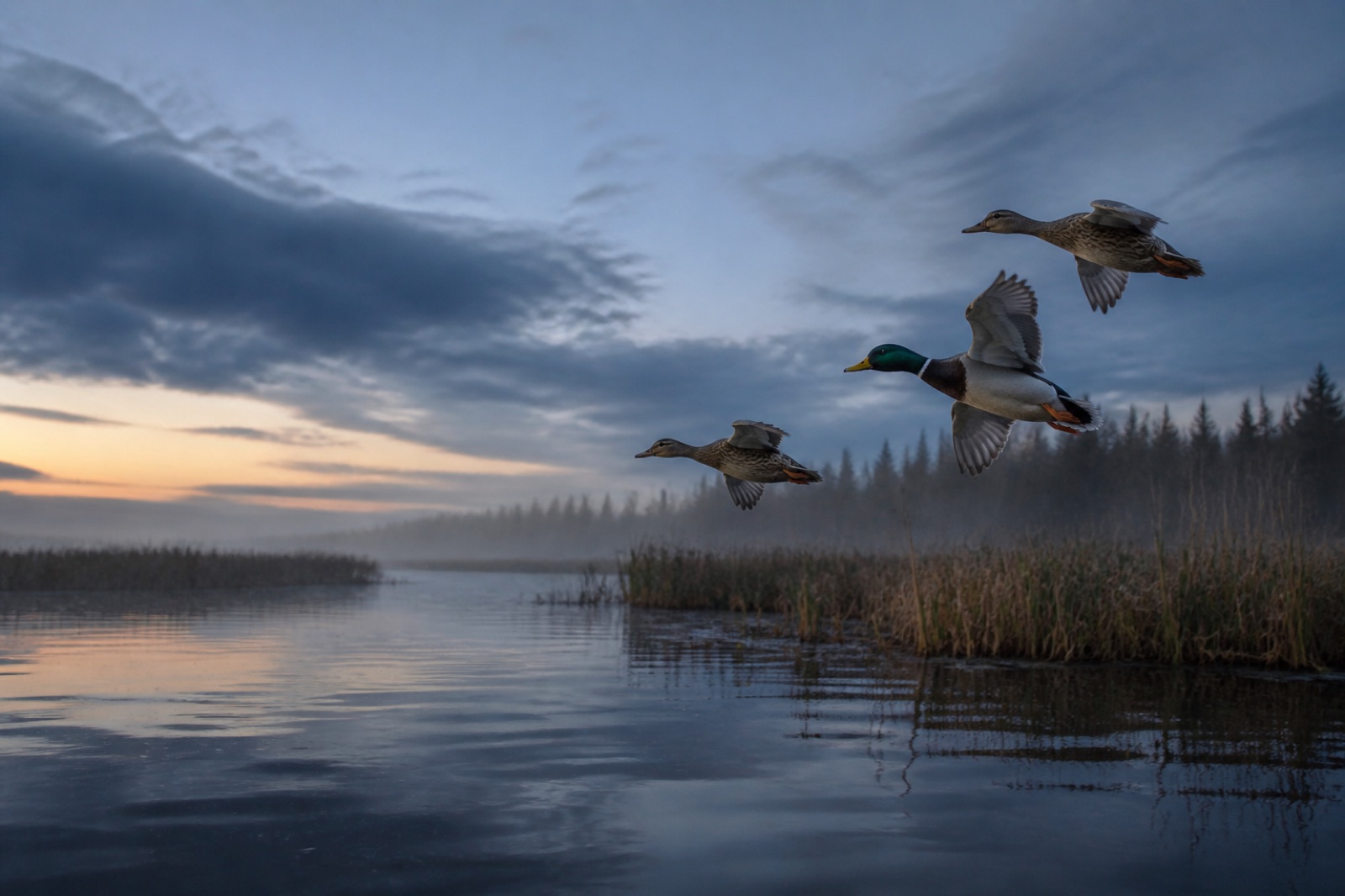
Call to the turn and finish
Build practical duck and goose calling sequences from quacks, greeting calls, clucks, honks, moans, and murmurs while reading distance and flight response.
2 connected field guidesWaterfowl can see the spread, hear the caller, and change direction within seconds. The useful sequence therefore changes with the flock: attention at distance, controlled conversation on the turn, and quieter ground talk when birds are already committed.
The duck and goose guides narrow large vocabularies to a few functional sounds, then use wingbeats, line of travel, and a flock sliding away to choose the next note.
Focused reading
Start with the question in front of you, then follow the related guide when the field situation changes.
Learn a beginner duck-calling sequence built around the basic quack, a measured greeting, visible bird response, softer finishing notes, and silence.
Practice Canada goose clucks, honks, moans, and murmurs on a short-reed call, then use flock response to control cadence, volume, and silence.
Species context
Use the species page for natural vocabulary, seasonal timing, response signs, field sequences, legal reminders, and its research trail.