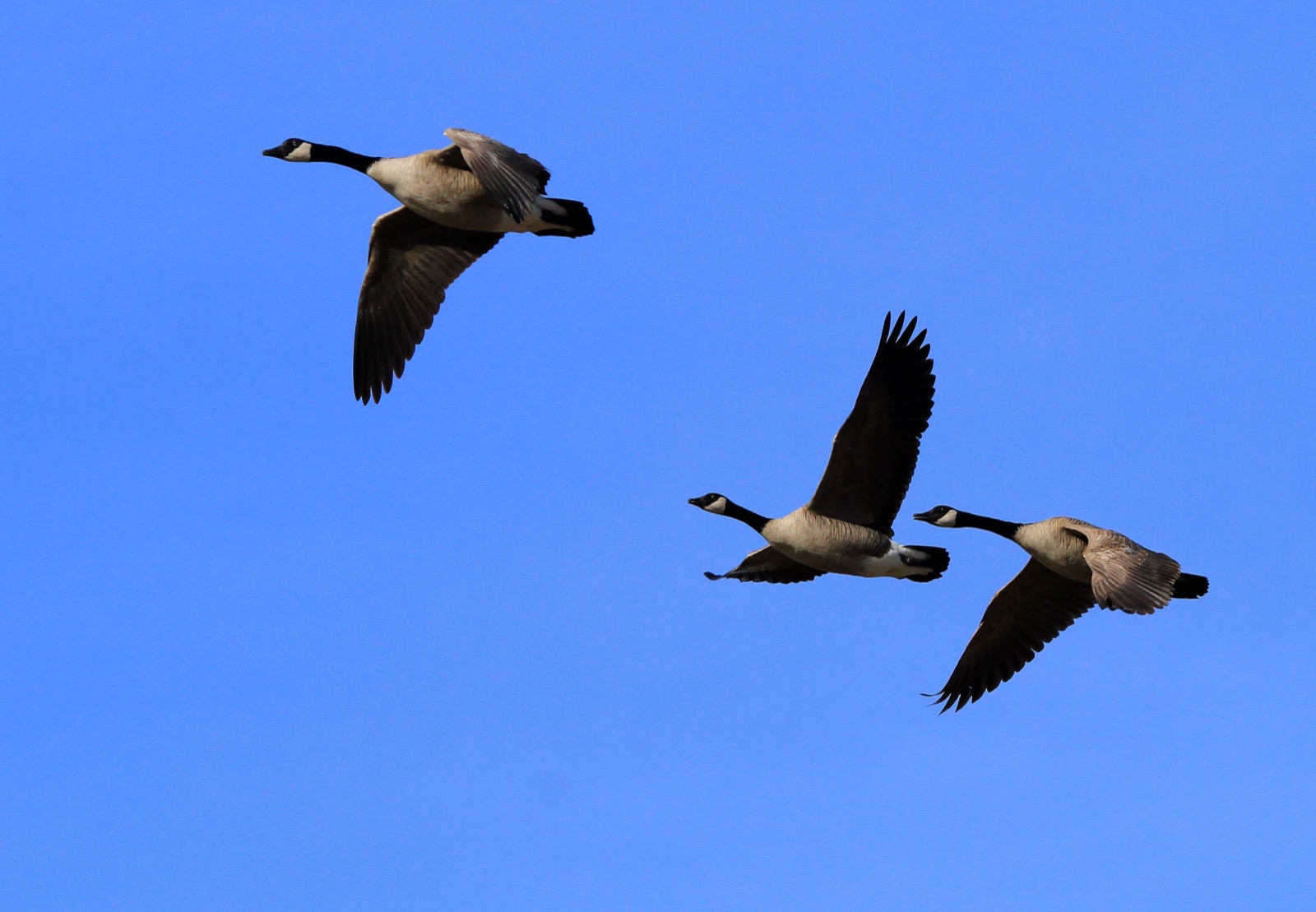
Direct answer
What canada goose calls mean in the field
Start with one clean fundamental note, listen to the flock, and match its level of excitement. A silent flock that is already approaching often calls for less sound, not a louder routine.
| Call or cue | What it communicates | Best context | Main risk |
|---|---|---|---|
| Cluck | General close or midrange communication that can express contact, interest, or mild excitement depending on pitch and spacing. | As the first note to master and as a restrained contact cue for geese that are close enough to read clearly. | A clean single cluck is more useful than a fast string of poorly broken notes. Do not confuse speed with realism. |
| Honk | Longer-range contact and flock communication, with meaning affected by intensity, cadence, and the surrounding birds. | To reach a flock at moderate distance or add one recognizable long note before shifting to shorter clucks. | Long loud honks can dominate close-range flock sound. Shorten and soften as distance closes. |
| Moan | A versatile social sound associated with geese in flight, on the water, or interacting in a group; context can range from contentment to excitement. | As a slower transition between clucks or a low-pressure note when geese are circling within easy hearing distance. | The moan is not automatically a finishing call. Use the flock's wing line, not the label of the note, to decide what follows. |
| Murmur or feeding talk | Close flock communication associated with feeding, loafing, and birds maintaining contact on the ground or water. | At low volume when birds are close and the decoy group is meant to sound settled rather than demanding. | Loud repetitive murmuring defeats the purpose of a quiet flock cue and can sound disconnected from a small spread. |
| Excited cluck series | A hunter-arranged imitation of geese becoming socially active as another group nears. | When a vocal flock shows interest but needs one stronger cue at a turn or the edge of the spread. | Sustained aggressive calling can pressure quiet or close geese. One readable burst is enough to test the idea. |
| Match-and-soften routine | A response-based routine rather than a distinct wild vocalization; its purpose is to keep the sound consistent with what the flock is already doing. | With vocal birds whose rhythm can be heard clearly enough to imitate without guessing. | Do not call over every goose in the flock. Leave open space for their replies and stop once the sound has accomplished its directional job. |
Vocabulary & use
Canada Goose calls, one by one
Cluck
Natural vocalization- Sound
- A compact two-part note with a clean break; the cluck is the foundation for many Canada goose sounds made on a short-reed call.
- Meaning
- General close or midrange communication that can express contact, interest, or mild excitement depending on pitch and spacing.
- When it fits
- As the first note to master and as a restrained contact cue for geese that are close enough to read clearly.
- How to make it
- Use fast, pressurized air and a quick tongue break while experimenting with hand back-pressure. Aim for one clean note before stringing notes together.
- Likely response
- Geese may answer, look toward the source, hold their line, or show no visible change.
- Do not miss
- A clean single cluck is more useful than a fast string of poorly broken notes. Do not confuse speed with realism.
Honk
Natural vocalization- Sound
- A longer, more drawn-out version of the basic two-part Canada goose note.
- Meaning
- Longer-range contact and flock communication, with meaning affected by intensity, cadence, and the surrounding birds.
- When it fits
- To reach a flock at moderate distance or add one recognizable long note before shifting to shorter clucks.
- How to make it
- Stretch the first portion of the basic cluck, then let the reed break cleanly. Keep the note shaped rather than simply louder.
- Likely response
- A flock may answer or look, but a honk alone does not show that the birds intend to change course.
- Do not miss
- Long loud honks can dominate close-range flock sound. Shorten and soften as distance closes.
Moan
Natural vocalization- Sound
- A drawn-out, lower, less sharply broken note than a cluck or honk.
- Meaning
- A versatile social sound associated with geese in flight, on the water, or interacting in a group; context can range from contentment to excitement.
- When it fits
- As a slower transition between clucks or a low-pressure note when geese are circling within easy hearing distance.
- How to make it
- Maintain steady air and hand pressure without forcing a hard reed break. Let the note taper naturally.
- Likely response
- It may blend into the social sound of a setup; birds may continue working or remain indifferent.
- Do not miss
- The moan is not automatically a finishing call. Use the flock's wing line, not the label of the note, to decide what follows.
Murmur or feeding talk
Natural vocalization- Sound
- Soft, low, rhythmic notes with less projection than honks or excited clucks.
- Meaning
- Close flock communication associated with feeding, loafing, and birds maintaining contact on the ground or water.
- When it fits
- At low volume when birds are close and the decoy group is meant to sound settled rather than demanding.
- How to make it
- Use soft air and partially muffled hand position to create short rounded notes with uneven spacing.
- Likely response
- Working geese may continue a lower pass, although many close birds will react more to concealment and decoy posture than to this sound.
- Do not miss
- Loud repetitive murmuring defeats the purpose of a quiet flock cue and can sound disconnected from a small spread.
Excited cluck series
Hunter calling routine- Sound
- Several faster, higher clucks with natural variation rather than an identical metronomic string.
- Meaning
- A hunter-arranged imitation of geese becoming socially active as another group nears.
- When it fits
- When a vocal flock shows interest but needs one stronger cue at a turn or the edge of the spread.
- How to make it
- Speed up two to five clucks, vary pitch slightly with hand position, then return to silence or a softer note.
- Likely response
- The flock may answer or tighten a turn; it may also continue past if the location or visual setup is wrong.
- Do not miss
- Sustained aggressive calling can pressure quiet or close geese. One readable burst is enough to test the idea.
Match-and-soften routine
Hunter calling routine- Sound
- A short answer that begins near the flock's intensity, then settles into clucks, moans, or silence as the birds close.
- Meaning
- A response-based routine rather than a distinct wild vocalization; its purpose is to keep the sound consistent with what the flock is already doing.
- When it fits
- With vocal birds whose rhythm can be heard clearly enough to imitate without guessing.
- How to make it
- Answer one phrase with similar energy, pause, and reduce both speed and volume on the next phrase if the flock turns toward the setup.
- Likely response
- Birds may continue calling, approach for another look, or become quiet as they evaluate the landing area.
- Do not miss
- Do not call over every goose in the flock. Leave open space for their replies and stop once the sound has accomplished its directional job.
Seasonal context
When the message is believable
Early resident season
Expect family groups familiar with local feeding and roost routes. Scout first, use simple clucks and honks, and verify the special season's exact methods.
Main migration
Project enough to reach moving birds, then mirror their excitement and soften as they descend. Fresh flocks and local birds may react differently.
Late season
Prioritize the right field, open water, and concealment. Use fewer notes, allow wider circles, and avoid trying to overpower large real flocks nearby.
Field sequences
Two restrained ways to build the conversation
These are decision frameworks, not guaranteed formulas. Shorten, soften, or stop when the animal gives new information.
Sequence 01
Two-note foundation
A small flock crosses at moderate distance and has not shown clear interest
- Give one honk followed by two separated clucks.
- Pause and watch the lead birds through a full turn.
- If they answer and angle closer, reply with two softer clucks and one moan.
- Let silence carry the final approach unless the flock begins drifting away.
Stop or change when: The geese hold an inward line, become quiet over the spread, or show a hard flare that points to a visual problem.
Sequence 02
Quiet flock match
Late-season geese are vocal but cautious and circle beyond the landing area
- Listen to one complete phrase from the flock before answering.
- Match it with one short phrase at slightly lower volume.
- On the next pass, use a moan and two soft clucks only if their line weakens.
- Remain silent while they inspect the spread.
Stop or change when: The flock begins descending, stops answering while still working, or repeats an outward route without any positive change.
Before the first note
Field setup
- Build the landing area on the upwind side of the visible flock and keep the callers out of the birds' direct inspection line.
- Match sound density to decoy density; a small family group should not sound like hundreds of geese.
- Give one hunter the lead when several people can call, with supporting callers filling gaps rather than duplicating every note.
- Keep eyes on the lead and trailing birds because different parts of a flock can react differently to the same phrase.
Read the animal
What the response is telling you
- A lead bird turns its head and answers while the flock begins a deliberate bank toward the source.
- The flock's honks become faster as it drops altitude or lines up with the wind.
- Birds stretch their necks, slide sideways, or split around the landing hole, indicating close inspection rather than commitment.
- A hard climb, rapid regrouping, or abrupt silence paired with an outward turn usually points to concern with concealment or the spread.
Common errors
What makes the setup less believable
Calling louder as birds get closer
Distance is shrinking, so the same pressure becomes more intense. Reduce volume and density unless the birds' behavior clearly calls for more energy.
Ignoring a silent flock
Geese that are not calling may not need a wall of sound. Start with one clean cue, then read their wings before adding another.
Assuming an early-season electronic-call exception
Federal Canada-goose exceptions are conditional, limited to approved goose-only periods and annual schedules, and can be narrowed further by state or property rules.
Rules & ethics
Verify before the hunt
Canada geese are migratory game birds. 50 CFR 20.21(g) generally prohibits recorded or electrically amplified bird calls, with limited exceptions for approved Canada-goose-only seasons when all other waterfowl and crane seasons are closed in specified flyway states and date windows. An exception exists only when the annual federal schedule and current state rules authorize it. Verify federal, state, refuge, tribal, and property regulations, licenses, stamps, limits, shooting hours, and nontoxic-shot requirements for the exact hunt.
Hunting-call laws vary by state, species, season, land type, and device. Verify the current wildlife-agency regulations for the exact hunt before using any recorded, amplified, or electronic call.
Electronic-call rules checklist →Questions hunters ask
Canada Goose calling FAQ
What Canada goose call should a beginner learn first?
The cluck. A clean cluck teaches air pressure, tongue break, and hand control, and it can be stretched into a honk or combined into more advanced routines.
Should I keep calling when geese are approaching?
Not automatically. If they hold a useful line, soften or stop. Resume only when a visible wing or direction change creates a specific reason for another cue.
Are electronic Canada goose calls legal in September?
Only in certain approved goose-only seasons and locations under federal and state schedules. The month alone does not make an electronic call legal.
Research trail
Sources and further reading
Biology and call context were synthesized into original copy from the following references.