Elk bugle vs. cow call
Compare elk bugles with cow mews and chirps, then choose a call by herd position, rut behavior, distance, and the response you can observe.
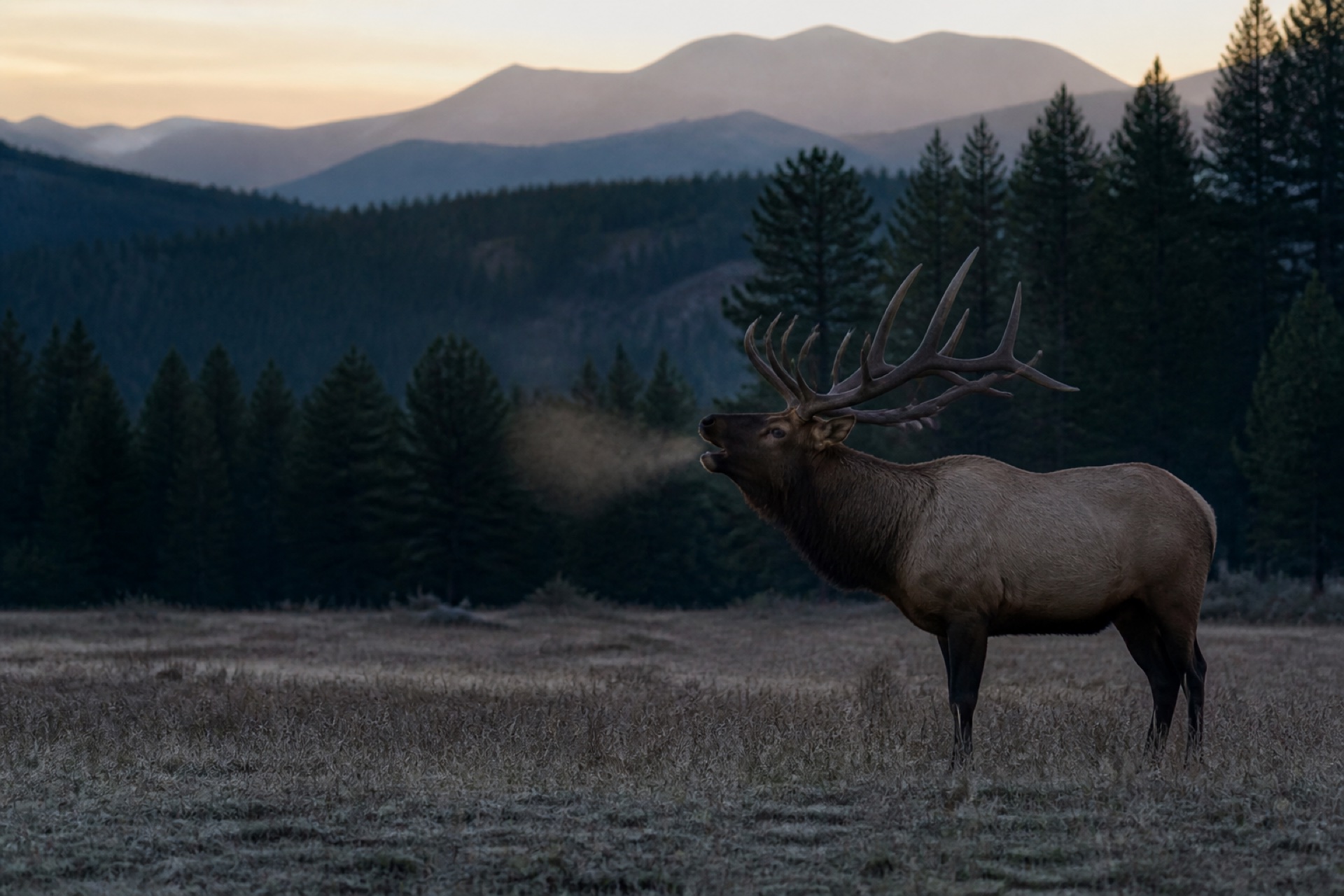
Hear the herd, not one note
Understand elk bugles, cow mews, contact sounds, warning barks, and rut-phase calling decisions without treating every vocal bull the same way.
2 connected field guidesElk are vocal, but volume alone does not explain the exchange. A bugle can advertise and locate, while cow and calf sounds maintain contact inside a herd; a bark changes the situation entirely because it often signals alarm.
Start with call meaning, then use terrain, wind, herd position, and rut stage to decide whether to answer, move, soften, or stay quiet.
Focused reading
Start with the question in front of you, then follow the related guide when the field situation changes.
Compare elk bugles with cow mews and chirps, then choose a call by herd position, rut behavior, distance, and the response you can observe.
Adapt elk bugles, cow calls, volume, and setup across pre-rut, peak breeding, and post-rut as herd structure and vocal behavior change.
Species context
Use the species page for natural vocabulary, seasonal timing, response signs, field sequences, legal reminders, and its research trail.