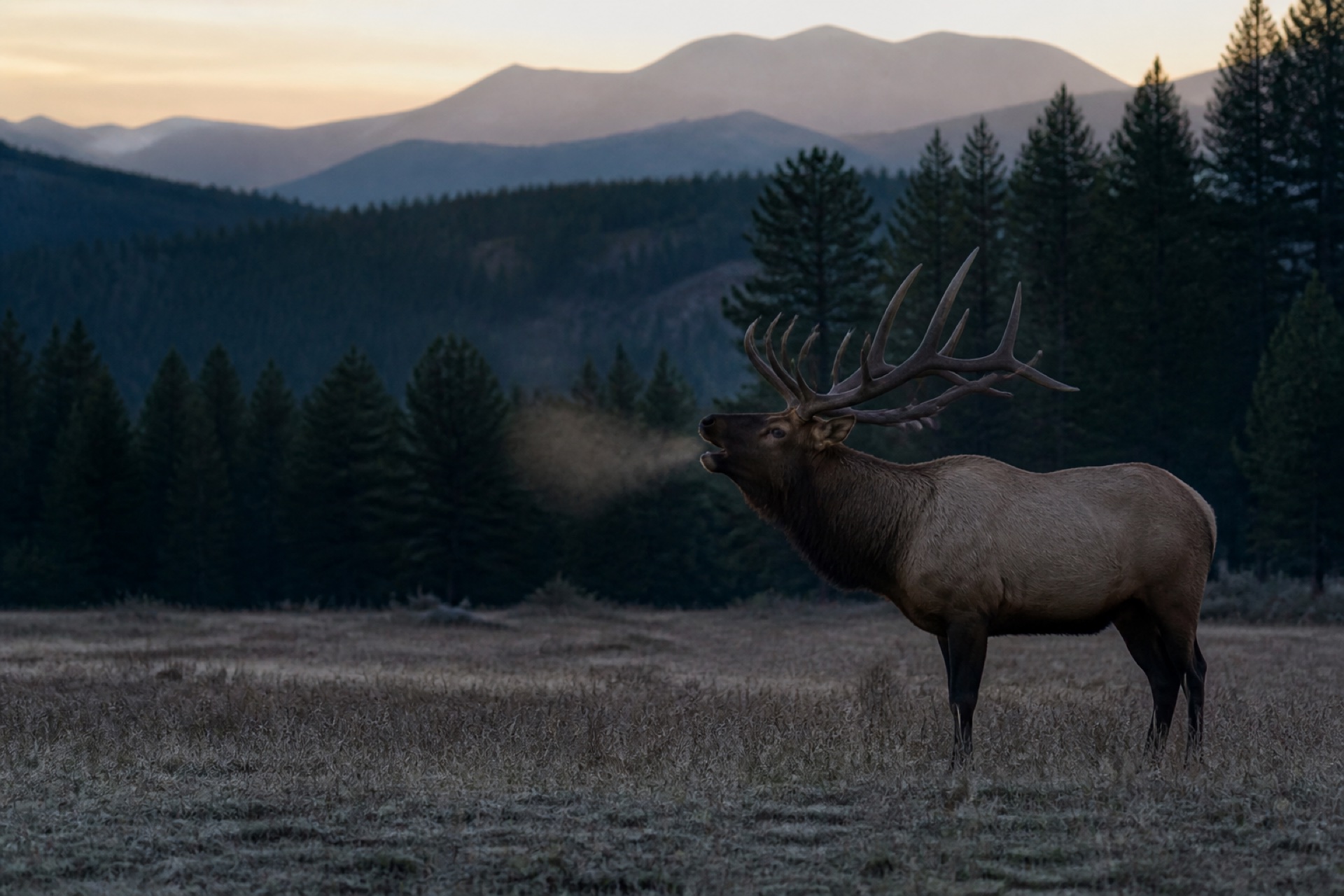
Elk calling changes as bulls move from summer patterns into herd formation, active breeding, and post-rut recovery. These phases are useful for planning, but their dates vary with region, elevation, subspecies, and local conditions. The phase in front of you is better identified through herd structure, wallows and rubs, vocal activity, and the behavior of bulls around cows than through a generic week printed on a calendar.
Natural elk communication also extends beyond a hunter's bugle tube. Bulls display, scent-mark, wallow, and guard cows; herds maintain contact with quieter sounds; alarm barks indicate a very different state. Effective calling respects that larger scene. Pick a message that could belong there, then let distance, wind, terrain, and the elk's response determine whether the next move is another note or silence.
What to carry into the field
- Judge rut phase from local herd behavior and official regional information instead of fixed nationwide dates.
- Use pre-rut calls to locate and make low-pressure contact as bulls become more vocal and herds assemble.
- During peak rut, distinguish a herd bull protecting cows from a satellite bull looking for opportunity.
- After the rut, reduce bugling pressure and favor quiet contact, glassing, current feed, and secure cover.
Field principle
Read herd structure before naming the phase
Before the breeding season, cows, calves, and younger elk may travel in loose groups while mature bulls spend time alone or with other bulls. As the rut builds, bulls gather or defend groups of cows, increase marking and wallowing behavior, and become more vocal. After breeding, bulls commonly separate and focus on recovering condition while winter groups and safe feeding areas become more important.
A single bugle does not prove peak rut, just as a quiet morning does not prove the rut is over. Wind, heat, terrain, predators, and hunting pressure affect when elk vocalize and where people can hear them. Combine multiple clues—who is grouped with whom, fresh sign, the location of feeding and bedding cover, and changes in vocal intensity—before choosing a calling approach.
Field principle
Pre-rut: locate, listen, and leave room to build
As bulls shed velvet and herd structure begins to change, occasional bugles can help advertise or locate, while cow-style mews and chirps can suggest elk maintaining contact. Begin below maximum volume and use terrain to project the sound. If a bull answers, its direction and whether it repeats from the same place are more useful than immediately turning the exchange into a challenge.
Fresh wallows, rubs, tracks, and growing vocal activity support a more rut-focused setup, but not every bull is ready to contest another. A compact locator bugle followed by silence gives the country time to answer. Soft cow calls may fit timbered travel near a known group. Escalate only when the response and herd situation give a reason, and keep the apparent source in cover that could conceal an elk.
Field principle
Peak rut: call to the bull's role, not only its volume
During active breeding, a herd bull may be occupied gathering cows and discouraging rivals, while satellite bulls remain near the edges looking for an opening. Both may bugle, but their incentives differ. A hard challenge could hold a competitive bull's attention, make a herd bull move cows away, or silence a younger bull. Cow contact sounds may suggest herd movement without forcing the same confrontation.
When a bull closes distance or a herd shifts toward the source, reduce calling and watch the wind. Close elk may arrive quietly through timber even after a loud exchange. Avoid reproducing an identical bugle-cow-call loop regardless of the response; natural herds do not perform for a timer, and every unnecessary note helps an alert animal pinpoint an empty patch of ground.
Field principle
Post-rut: trade confrontation for quiet contact
After breeding, bulls spend more time recovering body condition, and vocal competition generally declines. Elk may use heavier cover and gather around dependable forage, especially as pressure and weather change. Bugles can still occur, but recreating peak-rut intensity becomes a less coherent default. Glassing, tracks, feeding sign, and travel between security cover and food take on greater value.
If calling fits the legal hunt, use occasional soft chirps or mews to suggest nonthreatening herd contact, then allow a long listening window. A post-rut bull has no obligation to answer. Confirm current unit boundaries, season dates, license conditions, legal methods and electronic-call rules, land access, and shooting hours through the responsible agency before applying any phase-based strategy.
Practice block
The elk phase-and-role plan
- Record herd composition, fresh rut sign, recent vocal activity, feed, and bedding cover before assigning a phase.
- Identify the elk most likely to respond: searching bull, herd bull, satellite bull, or quiet post-rut group.
- Select one message and source location that fit that role, then decide what evidence would justify escalation.
- After calling, log direction, distance, herd movement, wind, and silence before choosing to answer, soften, or stop.
Questions readers ask
Elk calling by rut phase FAQ
When does the elk rut begin?
Timing varies by region, elevation, and herd. Many Rocky Mountain elk populations show rising rut behavior from late summer into fall, with active breeding commonly associated with September and October, but local wildlife-agency information and observed herd structure are the better guide.
Should I bugle more during peak rut?
Peak vocal activity can make bugling more relevant, but frequency should still follow the bull's response and role. A herd bull may move cows away from pressure, while a satellite bull may approach quietly. More calling is not automatically a more believable or effective exchange.
Do cow calls work after the elk rut?
Cow-style mews and chirps imitate general herd-contact sounds, so they can remain biologically plausible after breeding. Keep them soft and occasional, place them near current elk use, and do not expect a vocal answer. Glassing, feed, cover, tracks, and wind usually carry more of the post-rut plan.
Research trail
Sources and further reading
This guide draws on the behavior, calling practice, safety, and equipment context relevant to its subject from the references below.