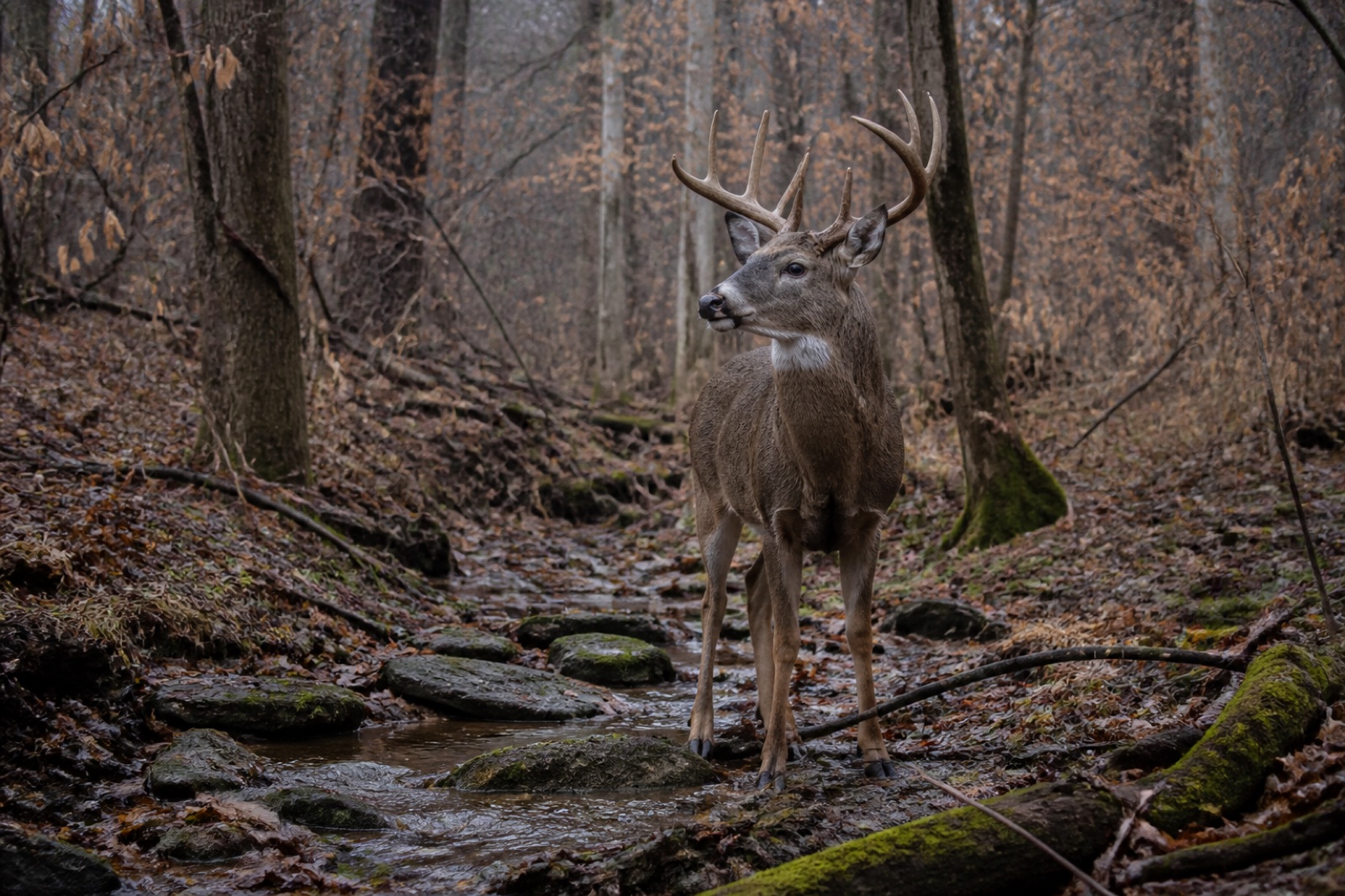
A grunt, a bleat, and the sound of antlers meeting can all make a deer investigate, but they do not describe the same event. Grunts and bleats imitate vocal sounds. Rattling is a hunter-made reconstruction of sparring or fighting, and its meaning changes with intensity. Choosing among them is less about finding a universally best call and more about sending a message that fits the deer, the season, and the cover in front of you.
White-tailed deer also communicate heavily through scent, posture, and movement, so sound is only one part of the exchange. A deer may hear a call, circle downwind, and never answer. Start with the lowest-pressure message that makes sense, give the animal time to react, and treat its line of travel or body language as better evidence than the number of sounds you can produce.
What to carry into the field
- Use a soft grunt as the most neutral of the three starting messages.
- Treat a bleat as a social or contact sound, not automatic proof that a doe is receptive.
- Match rattling intensity to plausible sparring or rut competition instead of staging the same fight all season.
- Stop calling when a deer looks, turns, or begins a downwind check; the sound has already done its job.
Field principle
What a grunt, bleat, and rattling sequence actually suggest
A short grunt is a low, compact deer vocalization that can function as a social note; bucks also grunt while following does during the rut. A bleat is a more nasal sound associated with contact, including communication between fawns and does. Commercial calls often label several versions as doe, fawn, contact, or estrus bleats, but those labels should not tempt a caller to make a precise claim about an unseen animal's reproductive state.
Rattling is different because it is not a vocalization. The hunter uses antlers, a bag, or another device to imitate the contact made when bucks spar or fight. Light, brief tickling can suggest low-stakes sparring, while hard clashes and scraping imply a more consequential contest. That progression is a calling interpretation of natural behavior, not a fixed script that wild deer repeat note for note.
Field principle
Choose the least pressure the season supports
Before strong rut behavior is visible, isolated grunts and soft contact bleats usually tell a simpler story than a prolonged fight. As day length shortens and buck competition becomes evident through fresh rubs, scrapes, chasing, or observed sparring, a brief rattling sequence can become more plausible. Even then, local deer behavior matters more than a date on a national rut calendar.
During active breeding, tending-style grunts and more assertive antler sound may interest a competitive buck, but stronger does not mean safer or more effective. A subordinate animal may avoid an apparent confrontation, and a mature buck may approach from cover to inspect before committing. After peak breeding, deer often shift attention toward food and secure cover, making quiet social sounds a better fit than recreating a long fight.
Field principle
Let distance, cover, and response make the choice
In close timber where an unseen deer could be within easy hearing, begin with one restrained grunt and scan before adding anything. A bleat can follow when a calm social contact story fits the group structure or phase. Rattling needs enough cover to hide the supposed deer while still giving an approaching animal a sensible place to look; an open source area with no deer visible can make the scene difficult to believe.
After any call, watch the ears, head, and travel line of visible deer. A turn toward the source, a pause behind cover, or a crosswind angle is already a response. Do not add a louder sound simply because the deer stays silent. If nothing reacts after an appropriate wait, change one variable at a time—message, direction, or volume—so the next observation can teach you something.
Field principle
Restraint, safe setup, and current rules come first
Rattling and realistic deer calls can draw another hunter as well as a deer. Use a position with a known backdrop and clear identification lanes, and never create movement with antlers where another person could mistake it for a live animal. Set up with your scent carrying away from likely cover, or use a stable crosswind while continuing to monitor the downwind edge, because a curious deer may trust its nose before its ears.
Hunting seasons, legal devices, public-land requirements, tagging rules, and restrictions on recorded or amplified calls vary by jurisdiction. Verify the current agency regulations for the exact species, unit, date, and property before using any call. A natural deer sound can be lawful to imitate with one device and restricted with another, so a general calling guide cannot replace the official rulebook.
Practice block
The three-message field rehearsal
- Name the phase and visible sign, then state whether a calm contact or competitive message fits better.
- Make one soft grunt, wait, and identify the closest cover and downwind route before adding sound.
- Add either one natural-length bleat or a short, phase-appropriate rattling exchange—not both automatically.
- Set the call down and scan in silence, noting any look, turn, pause, or downwind angle before deciding again.
Questions readers ask
Grunt vs. bleat vs. rattling FAQ
Should I grunt, bleat, or rattle first?
A soft grunt is usually the lowest-pressure starting point when an unseen deer may be close. Use a bleat when a calm social-contact sound fits, and reserve rattling for a season and setting where sparring or competition is plausible. Fresh sign and observed behavior should outrank a preset order.
Can rattling scare deer away?
It can. A hard fight suggests risk, and a cautious or subordinate buck may avoid it. Distance, previous hunting pressure, rut phase, and the realism of the source area all affect the response. Begin with a shorter, lighter sequence unless the evidence supports greater intensity.
How long should I wait after a deer call?
There is no universal minute count, because terrain and distance change how long an approach takes. Wait long enough to scan every likely lane and assume a deer could arrive silently. If you call again, do it for a reason rather than because the quiet feels unproductive.
Research trail
Sources and further reading
This guide draws on the behavior, calling practice, safety, and equipment context relevant to its subject from the references below.