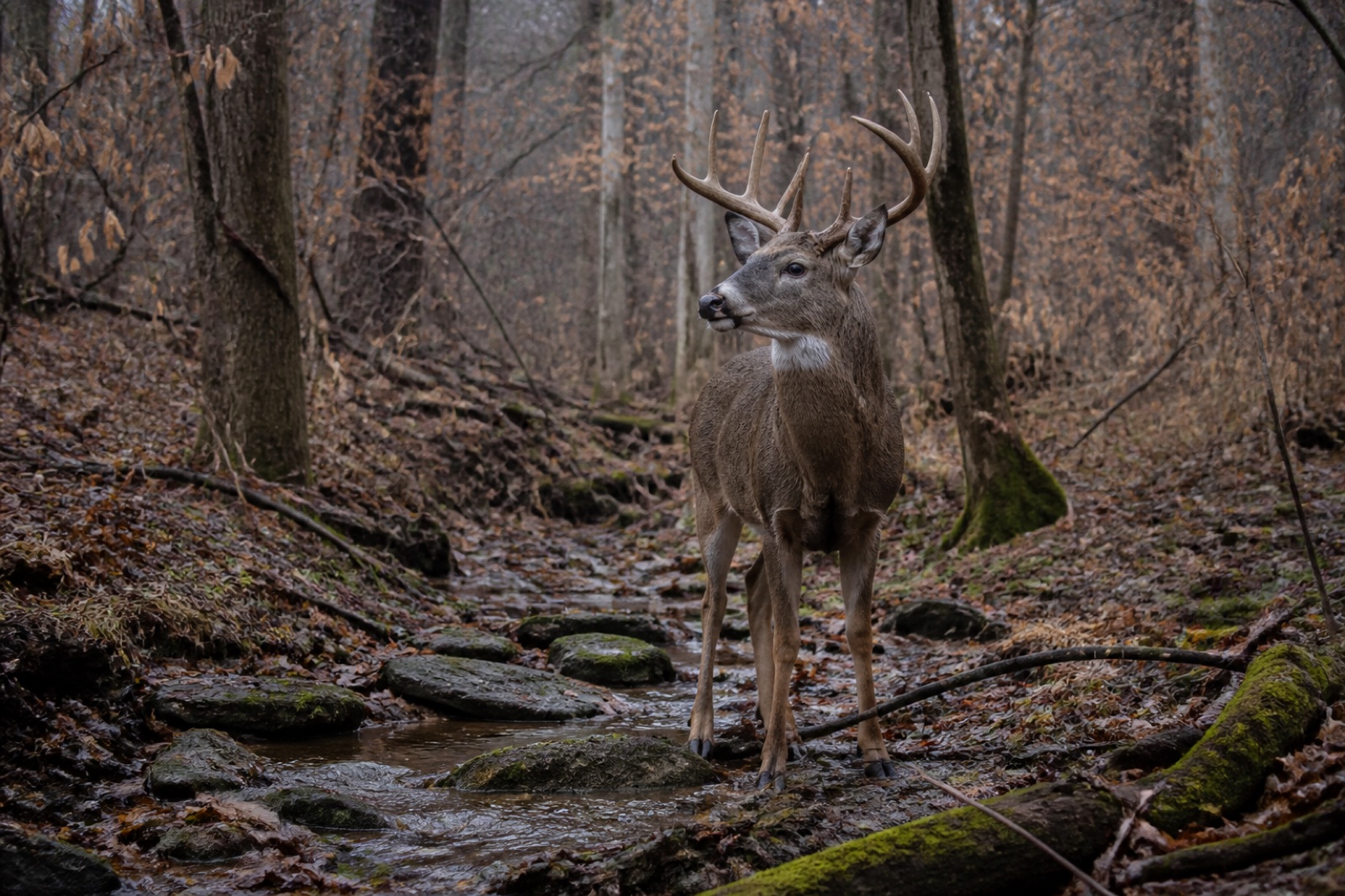
Pre-rut, peak rut, and post-rut are useful field labels, but deer do not cross those boundaries on the same morning everywhere. Breeding dates differ by latitude and region, and individual does enter estrus for short windows. Weather can change what a hunter sees on a given day without moving the underlying breeding season in the way many camp traditions suggest.
Calling should follow the behavior actually present: social groups and early marking, active searching and tending, or the quieter return to food and secure cover. The objective is not to make more noise as the calendar advances. It is to choose a believable message, place its source where a deer could exist, and reduce calling pressure as soon as an animal begins to solve the setup.
What to carry into the field
- Use regional agency data and current field sign to estimate rut phase; do not rely on one nationwide date.
- Keep pre-rut calling social and measured until rubs, scrapes, sparring, or chasing show rising competition.
- During peak breeding, match an observed situation instead of broadcasting an aggressive routine at every deer.
- Shift back toward quiet contact sounds and food-cover setups as post-rut deer recover and hunting pressure accumulates.
Field principle
Start with the local biological clock, not a universal chart
Decreasing day length helps drive the whitetail reproductive cycle, yet the timing of peak breeding varies substantially across the species' range. State wildlife agencies publish conception studies or regional estimates that are more useful than a broad national prediction. Rubs, scrapes, buck travel, chasing, and the composition of deer groups then help refine what is happening on the property you are hunting.
Cold fronts, rain, wind, and hunting pressure can alter visibility and movement. Seeing more bucks after a temperature drop does not necessarily mean the biological rut began that afternoon. Separate the breeding phase from the conditions that make deer observable, and avoid turning a short burst of activity into a claim that every deer nearby is behaving the same way.
Field principle
Pre-rut: introduce competition without inventing a battle
During the build toward breeding, bucks shed velvet, rework social relationships, rub trees, and begin scraping as local conditions develop. Soft grunts can fit routine contact, while a brief, light rattling sequence can suggest sparring once antler contact is plausible. This is a time to leave room for a deer to be curious without requiring it to confront a dominant rival.
Set up beside current travel and secure cover rather than calling into an empty landscape. Start quietly because a buck may already be close, then wait and watch for a silent crosswind or downwind approach. If fresh sign is absent and deer remain in relaxed feeding patterns, repeating an intense rut sequence does not make the seasonal story more convincing.
Field principle
Peak rut: respond to searching, tending, and competition
As more does become receptive, bucks may travel at unusual hours, trail or tend a doe, and interact with rivals. A short series of tending-style grunts can fit a buck following a doe. Rattling can portray competition, and a snort-wheeze can imitate a close dominance threat, but each step increases social pressure and can repel a deer that does not want the encounter.
A vocal reply is useful but not required. If a visible buck turns, stiffens, circles, or moves into cover toward the source, stop and let the behavior develop. Calling at a deer with a clear view of the supposed source can expose an empty scene, while calling through an approach can pull the animal into a less useful lane or make it halt to scent-check.
Field principle
Post-rut: lower the cost of investigating
After the primary breeding peak, deer increasingly concentrate on food, cover, and conserving or restoring body condition. Some breeding opportunity can remain, including later estrous cycles, so rut sounds do not become meaningless overnight. The balance changes, however: an extended fight may demand more risk and energy than a pressured buck is willing to spend.
Return to occasional contact grunts or a soft bleat near active food-to-cover movement, and allow longer quiet windows. Recheck the wind and access route because late-season pressure often makes deer more sensitive to human scent and disturbance. Before hunting, confirm current season dates, legal weapons and devices, tagging rules, and property-specific restrictions with the responsible wildlife agency.
Practice block
The phase-evidence checklist
- Read the current state or provincial rut information, then record the local date without treating it as proof.
- List three field observations—group structure, fresh sign, and movement—that support pre-rut, peak rut, or post-rut.
- Choose one message and an intensity that fits those observations, with a quieter fallback ready.
- After the sequence, log the deer's vocal, visual, or silent response before changing the call.
Questions readers ask
Deer calling by rut phase FAQ
What is the best rut phase for calling deer?
The pre-rut through active breeding often provides the broadest range of believable grunt and rattling situations, but there is no automatic best day. Local breeding timing, visible behavior, hunting pressure, wind, and the source setup all influence whether a deer investigates.
Does cold weather start the deer rut?
In northern whitetail populations, changing day length is a major driver of breeding timing. Cooler weather can increase daytime movement or make hunters more likely to observe it, which can create the impression that a front started the rut. Regional biology remains more important than a single forecast.
Should I stop calling after peak rut?
Not necessarily, but reduce the intensity and make the sound fit post-rut priorities. Soft contact calls near secure food-cover travel are generally a more coherent story than repeated hard rattling. Later breeding can occur, so current sign should still guide the choice.
Research trail
Sources and further reading
This guide draws on the behavior, calling practice, safety, and equipment context relevant to its subject from the references below.