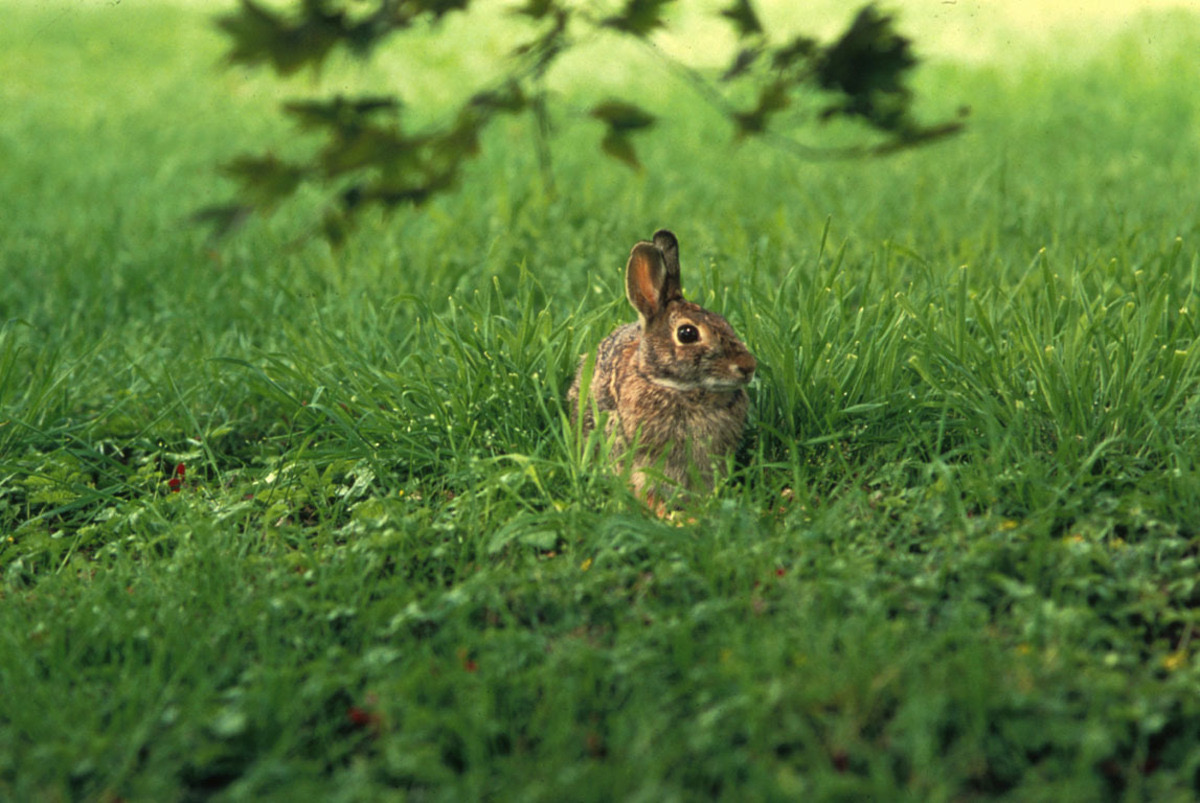
Direct answer
What eastern cottontail calls mean in the field
For rabbit hunting, fresh tracks, pellets, cut browse, dense escape cover, feeding time, and a slow approach are more useful than a call. A brief sound may make a nearby rabbit freeze, look, or shift, but the familiar rabbit-distress call is principally a predator-calling sound.
| Call or cue | What it communicates | Best context | Main risk |
|---|---|---|---|
| Hind-foot thump | Alarm or warning when a rabbit detects possible danger. | Mostly as a sign to interpret in the field, not as a proven attraction sound. | The message is danger. Repetition is more likely to increase caution than invite a rabbit closer. |
| Distress scream | Severe distress, not routine social contact. | Primarily as a prey sound when legally calling predators—not as a dependable way to call cottontails. | Do not describe this as a normal rabbit-hunting call. It can draw powerful non-target predators and other hunters. |
| Low grunt or growl | Agitation, courtship, or defense depending on posture and season. | As behavioral context rather than a long-range field call. | Avoid turning a subtle close-range note into a loud broadcast claim. |
| Kit squeal or squall | Juvenile contact or distress. | For natural-history understanding; not recommended around active nests or broods. | Never disturb a nest to provoke a response, and do not handle apparently unattended kits without agency or rehabilitator guidance. |
| Soft purr | Low-intensity social state. | As species vocabulary, not as a practical long-range hunting call. | Do not confuse domestic-rabbit communication advice with evidence for wild cottontail attraction. |
Vocabulary & use
Eastern Cottontail calls, one by one
Hind-foot thump
Nonvocal cue- Sound
- One or several hard impacts made with a rear foot against the ground.
- Meaning
- Alarm or warning when a rabbit detects possible danger.
- When it fits
- Mostly as a sign to interpret in the field, not as a proven attraction sound.
- How to make it
- If imitating it for observation, use one soft ground tap and then watch dense cover without repeating constantly.
- Likely response
- A nearby rabbit may freeze, become alert, retreat, or thump in return.
- Do not miss
- The message is danger. Repetition is more likely to increase caution than invite a rabbit closer.
Distress scream
Natural vocalization- Sound
- A loud, high, piercing scream given when a rabbit is captured or in extreme danger.
- Meaning
- Severe distress, not routine social contact.
- When it fits
- Primarily as a prey sound when legally calling predators—not as a dependable way to call cottontails.
- How to make it
- For predator calling, use irregular cries with long pauses and follow the predator species guide and local device rules.
- Likely response
- Coyotes, foxes, bobcats, raptors, or other predators may investigate; nearby rabbits may hide or freeze.
- Do not miss
- Do not describe this as a normal rabbit-hunting call. It can draw powerful non-target predators and other hunters.
Low grunt or growl
Natural vocalization- Sound
- Quiet guttural notes at close range.
- Meaning
- Agitation, courtship, or defense depending on posture and season.
- When it fits
- As behavioral context rather than a long-range field call.
- How to make it
- A soft throat note can imitate the shape, but there is little basis for treating it as a reliable hunting sequence.
- Likely response
- A very close rabbit might pause or become more alert; most distant rabbits will not hear it.
- Do not miss
- Avoid turning a subtle close-range note into a loud broadcast claim.
Kit squeal or squall
Natural vocalization- Sound
- High squeals from young rabbits when separated or disturbed.
- Meaning
- Juvenile contact or distress.
- When it fits
- For natural-history understanding; not recommended around active nests or broods.
- How to make it
- Do not deliberately imitate it near known nests. Observation should not create prolonged maternal or predator attention.
- Likely response
- A female may attend to young; predators may also locate the nest area.
- Do not miss
- Never disturb a nest to provoke a response, and do not handle apparently unattended kits without agency or rehabilitator guidance.
Soft purr
Natural vocalization- Sound
- A very quiet, close-range vibrating note associated with social or contented behavior.
- Meaning
- Low-intensity social state.
- When it fits
- As species vocabulary, not as a practical long-range hunting call.
- How to make it
- No field imitation is necessary; the sound is too quiet and context-dependent to anchor a responsible calling claim.
- Likely response
- No predictable hunting response should be expected.
- Do not miss
- Do not confuse domestic-rabbit communication advice with evidence for wild cottontail attraction.
Seasonal context
When the message is believable
Green cover
Focus on weedy feeding edges at dawn and dusk. Calling adds little compared with slow glassing and a careful approach.
Leaf-off cover
Brush piles, briars, stone walls, and young growth concentrate rabbits. A single reaction tap can be followed by a long visual scan.
Winter pattern
Tracks and browse reveal current pockets. Work protected sunny edges and dense escape cover quietly.
Field sequences
Two restrained ways to build the conversation
These are decision frameworks, not guaranteed formulas. Shorten, soften, or stop when the animal gives new information.
Sequence 01
Single reaction tap
Fresh cottontail sign is present in dense brush, but the rabbit is not visible.
- Settle with a clear view of likely runs and openings.
- Make one muted ground tap similar to a distant foot thump.
- Watch for an ear, eye, or small shift in the cover for at least one minute.
- If nothing changes, resume a slow habitat-first approach rather than repeating an alarm loop.
Stop or change when: A rabbit reveals itself, retreats, or local species identification is uncertain.
Sequence 02
Predator-call handoff
The actual goal is to use cottontail distress as a prey sound for a legally hunted predator.
- Leave the rabbit-hunting setup and plan around the target predator's wind, backstop, and legal method.
- Use a short irregular distress series rather than a constant loop.
- Watch for the target predator as well as raptors, pets, and other non-targets.
- Follow the coyote, fox, or bobcat guide for waiting time and response decisions.
Stop or change when: Any animal approaches without positive identification, a protected non-target engages, or the legal setup changes.
Before the first note
Field setup
- Find fresh pellets, tracks, clipped browse, runs, and dense escape cover before considering any sound.
- Move slowly and stop often; cottontails commonly freeze before flushing and can be visible only as an eye or ear in cover.
- Keep hunters in a safe, visible line where legal group-walking tactics are used, and know every person's shooting lane.
- Identify local rabbit species because protected New England cottontails or other limited populations can overlap similar habitat.
Read the animal
What the response is telling you
- A rabbit that flattens and holds still has detected danger; more sound is unlikely to make it comfortable.
- One ear, a dark eye, or a slight turn inside briars may be the complete visual reaction.
- A foot thump from cover confirms an alert rabbit but not a willingness to approach.
- A sudden zig-zag flush is escape behavior. Maintain safe lanes and do not let calling distract from other hunters.
Common errors
What makes the setup less believable
Treating distress as a rabbit magnet
The scream signals extreme danger and is commonly used to call predators. It is not a dependable cottontail-attraction technique.
Calling without fresh habitat sign
Cottontails occupy small, cover-dependent pockets. Tracks, pellets, browse, and escape cover are better evidence than silence after a call.
Ignoring species identification
Eastern, New England, swamp, and other rabbits can have different protections and local status. Similar appearance is not permission to assume.
Rules & ethics
Verify before the hunt
Check current rabbit season, hours, bag and possession limits, legal species, weapons, electronic calls, public-land rules, blaze-orange requirements, and closures during other seasons. Some cottontail species or local populations are protected; identify before acting.
Hunting-call laws vary by state, species, season, land type, and device. Verify the current wildlife-agency regulations for the exact hunt before using any recorded, amplified, or electronic call.
Electronic-call rules checklist →Questions hunters ask
Eastern Cottontail calling FAQ
Can you call eastern cottontail rabbits?
A brief sound may make a nearby rabbit freeze, look, or reveal itself, but there is weak support for a reliable attraction sequence. Habitat, timing, sign, and quiet movement are the primary method.
Why do rabbit distress calls work for predators?
The high scream advertises vulnerable prey. Coyotes, foxes, bobcats, raptors, and other predators may investigate even though the sound often makes nearby rabbits hide.
What does a rabbit foot thump mean?
It is commonly an alarm or warning cue. A hunter should read it as evidence that the rabbit is alert, not as an invitation to keep calling.
Research trail
Sources and further reading
Biology and call context were synthesized into original copy from the following references.