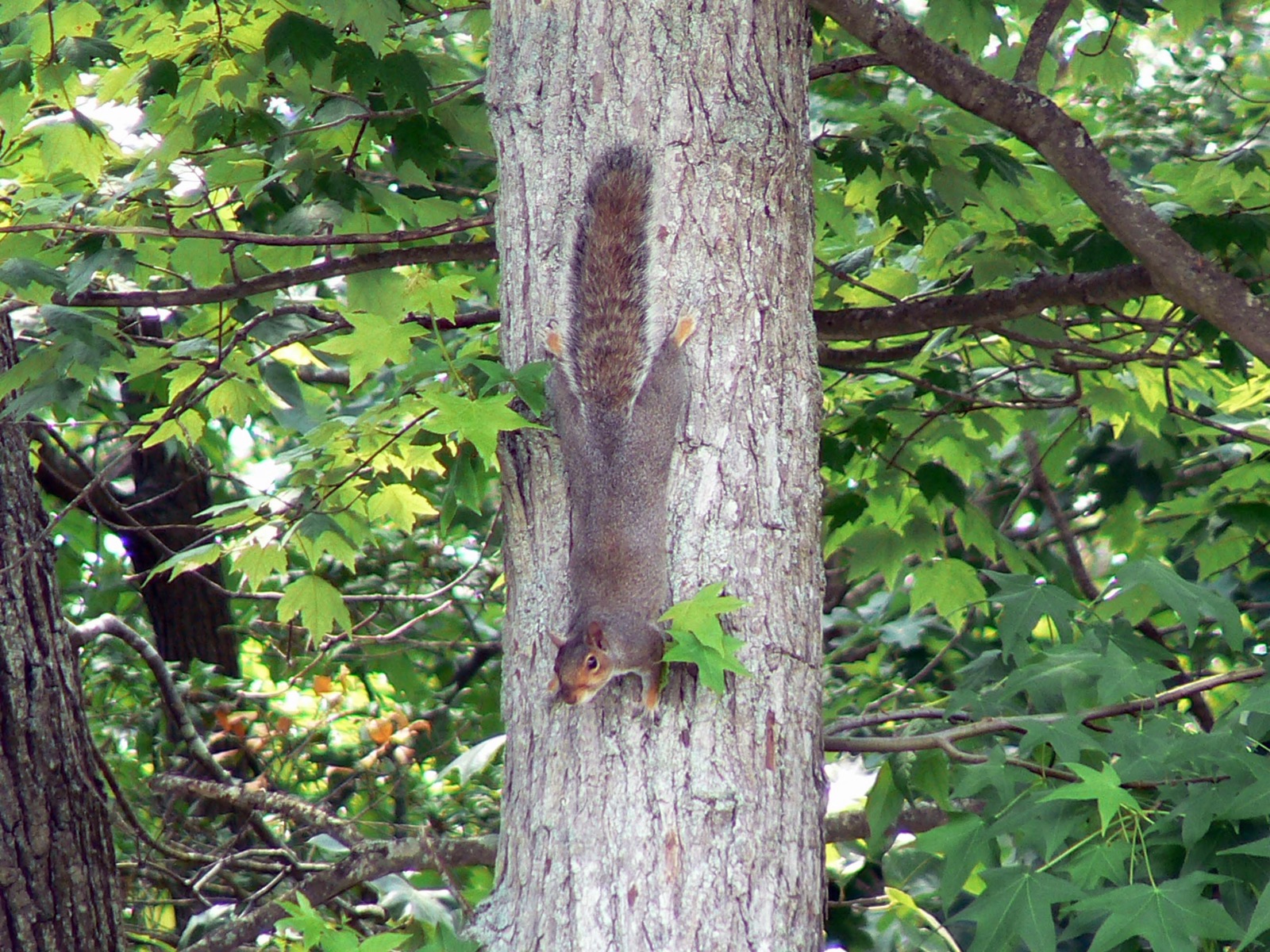
Direct answer
What gray squirrel calls mean in the field
The useful sequence is short. Call once, then inspect trunks, vine tangles, branch forks, and the canopy directly overhead. A squirrel can move toward the caller without making another sound, and noisy repetition makes that subtle response easy to miss.
| Call or cue | What it communicates | Best context | Main risk |
|---|---|---|---|
| Kuk bark | Alarm or alert directed at a nearby ground threat. | To prompt a hidden squirrel to answer in woods with fresh feeding or travel sign. | An alarm response reveals location but does not mean the squirrel is approaching. |
| Quaa | Sustained alarm after the immediate bark series. | After a brief kuk sequence when trying to sound like one squirrel holding concern on a ground threat. | Too many identical quaas create a mechanical pattern and keep the woods on alarm. |
| Moan | Lower-intensity concern or a continuation of alarm communication. | As a quiet change after kuks and quaas, especially when a squirrel has answered but not shown itself. | The moan is a finishing detail, not a reliable locator by itself across long distance. |
| Distress wheeze or whistle | Extreme distress that can trigger curiosity, alarm, or defensive attention. | Briefly near den trees or active feeding cover after quieter locating calls fail. | Distress may also attract predators and raptors. Stop when a protected non-target becomes engaged. |
| Chatter or chirr | Excitement, irritation, or close social tension. | As a short close-range reaction sound after a squirrel's location is generally known. | Do not let constant chatter replace the quiet visual search. |
| Gnawing and feeding cue | Another squirrel appears to be feeding safely nearby. | During active mast feeding when acorns or nuts are present on the ground and trees. | The cue works only when it fits the food source and should not be created with litter or illegal bait. |
Vocabulary & use
Gray Squirrel calls, one by one
Kuk bark
Natural vocalization- Sound
- A short, sharp bark repeated in a measured series.
- Meaning
- Alarm or alert directed at a nearby ground threat.
- When it fits
- To prompt a hidden squirrel to answer in woods with fresh feeding or travel sign.
- How to make it
- Give three to six crisp barks, turn the call slightly between notes, then stop and listen.
- Likely response
- Another squirrel may bark, flick its tail, move to the back of a trunk, or climb for a better view.
- Do not miss
- An alarm response reveals location but does not mean the squirrel is approaching.
Quaa
Natural vocalization- Sound
- A longer, rougher descending note that follows or alternates with kuks.
- Meaning
- Sustained alarm after the immediate bark series.
- When it fits
- After a brief kuk sequence when trying to sound like one squirrel holding concern on a ground threat.
- How to make it
- Draw one or two raspy notes out, then leave a substantial pause.
- Likely response
- A squirrel may answer from another tree or remain motionless while watching the apparent threat.
- Do not miss
- Too many identical quaas create a mechanical pattern and keep the woods on alarm.
Moan
Natural vocalization- Sound
- A softer, lower wavering note sometimes mixed into an alarm sequence.
- Meaning
- Lower-intensity concern or a continuation of alarm communication.
- When it fits
- As a quiet change after kuks and quaas, especially when a squirrel has answered but not shown itself.
- How to make it
- Reduce air pressure and draw out one subdued note rather than starting a new loud series.
- Likely response
- The squirrel may relax enough to shift position or continue answering softly.
- Do not miss
- The moan is a finishing detail, not a reliable locator by itself across long distance.
Distress wheeze or whistle
Natural vocalization- Sound
- High squeals, wheezes, and whistles that suggest a squirrel is caught or under attack.
- Meaning
- Extreme distress that can trigger curiosity, alarm, or defensive attention.
- When it fits
- Briefly near den trees or active feeding cover after quieter locating calls fail.
- How to make it
- Use a few high uneven notes and pair them, if desired, with legal leaf or branch movement away from the caller.
- Likely response
- Squirrels may bark, rush closer through branches, hide, or remain frozen while looking.
- Do not miss
- Distress may also attract predators and raptors. Stop when a protected non-target becomes engaged.
Chatter or chirr
Natural vocalization- Sound
- Rapid toothy chatter and short vibrating notes.
- Meaning
- Excitement, irritation, or close social tension.
- When it fits
- As a short close-range reaction sound after a squirrel's location is generally known.
- How to make it
- Create one fast irregular burst, then watch the nearest branches above the call.
- Likely response
- A squirrel may chatter back, shift sides of the trunk, or close some distance to inspect.
- Do not miss
- Do not let constant chatter replace the quiet visual search.
Gnawing and feeding cue
Nonvocal cue- Sound
- Light scraping, shell cutting, and small falling fragments associated with feeding.
- Meaning
- Another squirrel appears to be feeding safely nearby.
- When it fits
- During active mast feeding when acorns or nuts are present on the ground and trees.
- How to make it
- Scratch two dry objects softly or cut a nut where legal, then pause as if feeding rather than producing a steady scrape.
- Likely response
- A squirrel may resume feeding, move toward the sound, or reveal itself by dropping cuttings.
- Do not miss
- The cue works only when it fits the food source and should not be created with litter or illegal bait.
Seasonal context
When the message is believable
Early mast
Use feeding cues and modest social sounds around current nut trees. Watch for cuttings and branch movement.
Leaf fall
Alarm barks carry well and visibility improves. Call from a still position, then inspect the entire trunk and canopy.
Winter den pattern
Focus on sunny periods, den trees, and sheltered creek timber. Use fewer calls and longer visual waits.
Field sequences
Two restrained ways to build the conversation
These are decision frameworks, not guaranteed formulas. Shorten, soften, or stop when the animal gives new information.
Sequence 01
Alarm-location sequence
Fresh feeding sign is present, but no squirrel is visible in a mature hardwood pocket.
- Give four short kuk barks and one drawn-out quaa.
- Remain silent for 45 to 60 seconds while watching trunks and listening for an answer.
- Repeat with two kuks and one softer moan from a slightly different direction.
- Stop calling and inspect every branch fork for several minutes.
Stop or change when: A squirrel answers, moves, or begins watching the source; use the new location information instead of adding noise.
Sequence 02
Feeding-to-distress sequence
Mast is active and squirrels have gone quiet after detecting the caller's approach.
- Create 10 seconds of light nut-cutting or leaf-scratching sound, then wait.
- If nothing changes after two minutes, add three short chatter notes.
- Use one brief distress whistle only as the final reaction sound.
- Scan overhead and adjacent trees through a long silent finish.
Stop or change when: A squirrel reveals itself or a raptor or other non-target begins responding.
Before the first note
Field setup
- Begin where fresh nut cuttings, bark wear, tracks, leaf nests, or den cavities show current use.
- Stand where several trunks are visible from base to crown; squirrels often circle to the back side rather than cross open limbs.
- Watch the canopy over and behind the caller after distress notes because a response can come from above.
- Know the local squirrel species. Protected or limited populations may overlap gray squirrel habitat.
Read the animal
What the response is telling you
- An answering bark gives direction, but the squirrel may stay on the far side of the trunk.
- A tail flick or a few falling leaves can reveal an otherwise silent squirrel.
- Movement directly above the caller is common after a distress sound; check before shifting position.
- Sudden complete silence after your approach may mean squirrels are frozen in place, not absent.
Common errors
What makes the setup less believable
Calling where there is no current food or cover
Calls are reaction tools. Fresh mast, cuttings, den trees, and travel cover identify where a response is possible.
Looking only toward the answer
A second squirrel may approach from above or behind while the vocal animal holds your attention.
Never letting the woods settle
Repeated alarm notes keep every squirrel focused on danger. Short sequences and long scans reveal more.
Rules & ethics
Verify before the hunt
Verify the current squirrel season, bag limit, legal species, methods, public-land rules, and any electronic-call restriction. Some local squirrel populations or look-alike species are protected. Distress sounds can attract raptors and other non-targets.
Hunting-call laws vary by state, species, season, land type, and device. Verify the current wildlife-agency regulations for the exact hunt before using any recorded, amplified, or electronic call.
Electronic-call rules checklist →Questions hunters ask
Gray Squirrel calling FAQ
Do squirrel calls bring squirrels to the caller?
Sometimes, but their most dependable use is making a hidden squirrel answer, look, or move. Habitat and a careful visual search remain primary.
What does a squirrel bark mean?
Short kuks and longer quaas are commonly associated with alarm. The structure can change with the kind and urgency of the perceived threat.
When should I use a squirrel distress call?
Use it briefly around active cover after quieter locating options. It can create curiosity or alarm, but it may also attract predators and raptors.
Research trail
Sources and further reading
Biology and call context were synthesized into original copy from the following references.