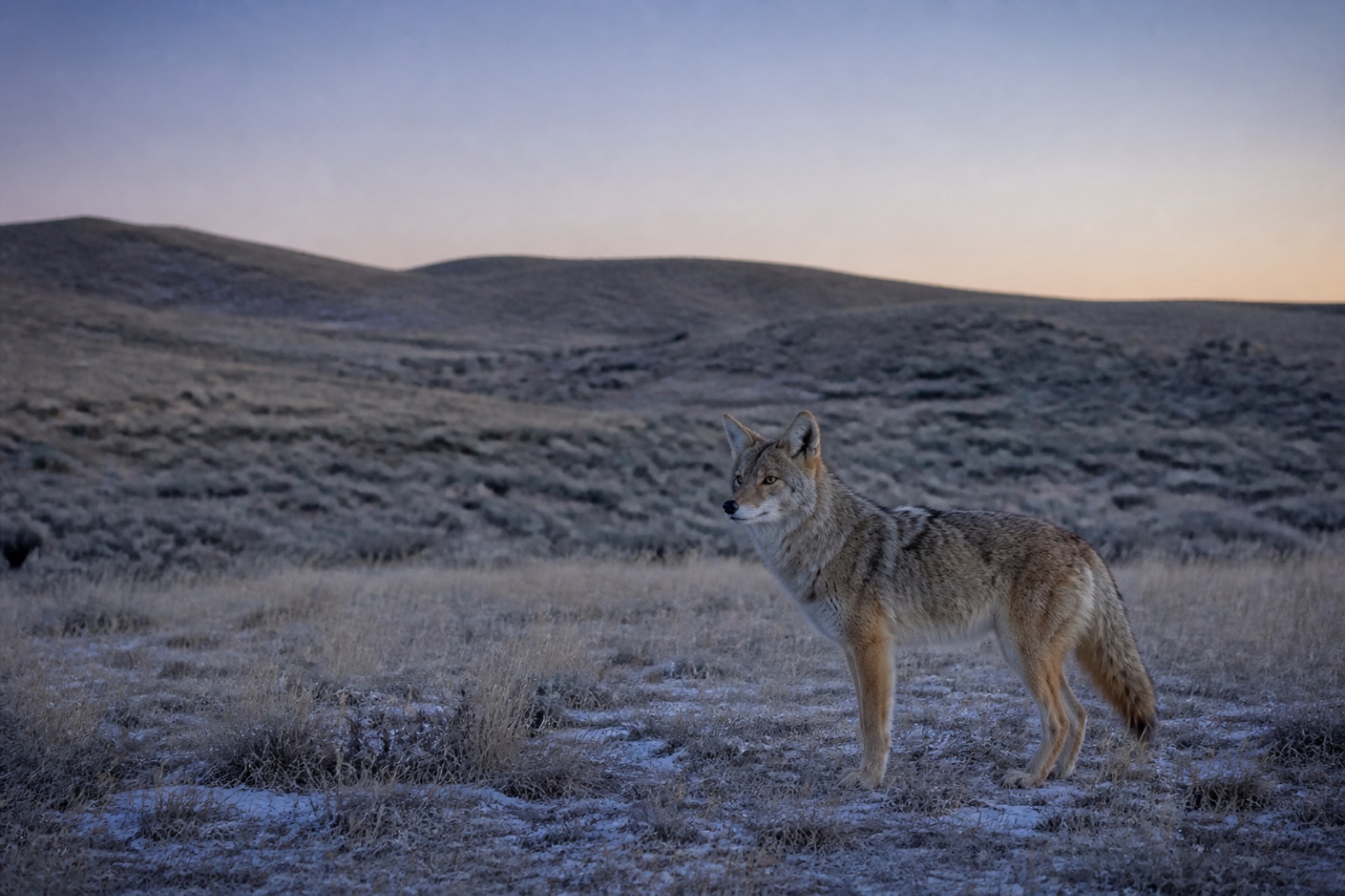
A coyote howl and a distress call present different events. Howls, yips, barks, and whines belong to coyote social communication; prey distress suggests a vulnerable food source; pup distress adds a coyote-specific signal that can carry social urgency. None is a universal button, and a silent stand does not prove that the sound went unheard.
Choose an opener only after the setup is complete. Coyotes may approach without answering, pause where they can see the source, or swing downwind before becoming visible. The sound starts the encounter, but wind, access, source placement, visibility, positive identification, and current method rules determine whether the stand is credible and safe.
What to carry into the field
- Howls are social and territorial signals; prey distress presents food, while pup distress carries social urgency.
- A vocal answer confirms contact but does not guarantee an approach, and no answer does not mean no coyote is moving.
- Match the message to local sign, season, pressure, and the coyote likely to occupy the area.
- Set up the downwind arc, backstop, roads, livestock, pets, and legal method before making any sound.
Field principle
Three sound families, three different stories
A lone howl can announce an individual and help separated coyotes locate one another. Group yip-howls can reinforce family contact and territorial occupancy, while bark-howls often carry warning or pressure. Those meanings overlap, and researchers caution that a small number of coyotes can sound like a much larger group. Counting voices is not a dependable population survey.
Prey distress is not coyote language at all. It imitates a rabbit, rodent, bird, or young ungulate in trouble and appeals to feeding or investigation. Pup distress is different again: it comes from within the species and may prompt parental, social, territorial, or curious behavior depending on season and the animal listening. Keep those stories separate when planning the stand.
Field principle
When a social howl fits the evidence
A restrained lone howl can make sense where tracks, scat, cameras, or recent vocal activity indicate coyotes using the area. Social calling is especially relevant when pairs and family groups are maintaining contact or territory, but season does not make every listener equally bold. A dispersing animal may avoid an oversized group scene, and a pressured resident may investigate without answering.
After howling, listen long enough to separate an actual reply from echo, dogs, or a second group. Note direction and changes rather than treating volume as distance. Repeated barks or bark-howls can indicate suspicion or warning; answering with greater aggression may intensify the wrong message. If the source has been detected, protect the downwind and scan instead of turning the exchange into a contest.
Field principle
When distress creates the more believable scene
Prey distress fits places where the imitated prey actually lives and where a coyote could approach using cover. A rabbit sound over short grass, a rodent sound near field edges, or a bird sound in brush tells a more coherent story than a random recording chosen for intensity. Use imperfect, varied bursts with real silence rather than an identical loop that never breathes.
Pup distress has stronger seasonal and social context. It may attract an adult or another group member, but prolonged disturbance near a confirmed den is unnecessary and can disrupt family behavior. In any season, distress can also attract foxes, bobcats, raptors, domestic animals, or another hunter. Identify the animal completely and know the background before considering a shot.
Field principle
Choose one opener, then let the response edit the plan
Start with the smallest believable message. Use a howl when the goal is social contact and the local evidence supports it; use prey distress when food and habitat provide the stronger explanation. Combining the two can make sense—a lone coyote followed later by prey activity, for example—but the transition should tell one plausible event rather than advertise every sound on the caller.
Before the opener, position so the likely downwind check remains visible without sending scent through expected cover. Scout structures, roads, trails, livestock, and domestic dogs, especially for low-light or legal night work. Confirm rules for seasons, electronic callers, artificial light, thermal or night-vision equipment, weapons, and land access from the current wildlife agency materials for that exact location.
Practice block
The one-message stand plan
- List the local evidence—tracks, scat, cameras, prey, recent howling, season, and hunting pressure—without assuming a coyote's intent.
- Choose one opening story: lone social contact, prey vulnerability, or context-appropriate pup distress.
- Draw the sound source, approach cover, visible downwind arc, backstop, roads, livestock, homes, pets, and partner position.
- Write the response that means remain silent, add one related sound, end the sequence, or abandon the stand safely.
Questions readers ask
Coyote howls vs. distress calls FAQ
Should a coyote stand begin with a howl or prey distress?
Choose the message that best fits the evidence. A restrained howl can test for social contact where coyotes are known to use the area; prey distress can create a food-based scene in suitable habitat. Neither opener guarantees a response, and the downwind setup matters more than following a universal order.
Why did a coyote howl back but never appear?
A reply confirms that a coyote heard or reacted to the sound, not that it intends to approach. It may hold territory, gather information, move behind cover, circle downwind, or remain with other coyotes. Echo can also distort location. Record direction and changes, then keep scanning instead of calling over every answer.
Can I mix coyote howls and distress calls?
Yes, where legal, if the transition forms a plausible scene and each sound has a reason. Begin with a clear primary message and leave genuine silence between sound families. Rapidly cycling through unrelated howls, pup cries, and several prey species makes response difficult to read and may pressure cautious animals.
Research trail
Sources and further reading
This guide draws on the behavior, calling practice, safety, and equipment context relevant to its subject from the references below.